Here is a 3D printing electricity cost calculator designed for both casual users and small 3D print business owners. While electricity may not be the largest cost factor in 3D printing, energy prices continue to increase in many parts of the world, making it important to understand how much operating a specific 3D printer actually adds to your overall expenses. This online calculator helps you estimate the electricity cost of a 3D print based on power, print time, and your local tariff. Whether you are based in the UK, US, EU, or elsewhere, you can adjust the rate per kWh and see realistic numbers instantly.
Electricity Cost Calculator
Estimate how much a print costs to run based on your printer’s power usage and electricity rate.
This electricity calculator focuses on energy consumption. For a broader estimate that includes filament costs and other print variables, see our 3D Print Cost Calculator to calculate the full cost of a 3D print.
How to Use This Calculator
Enter your printer’s average power draw in watts, your electricity rate per kWh, and your print time in hours. Click Calculate to see the estimated electricity cost for that print, the cost per hour, and the total energy used in kWh. If you print regularly, add your estimated monthly print hours to get a rough monthly running cost.
How to Find Your Printer Wattage
The most accurate way to find your printer’s real power consumption is to use a plug-in watt meter or a smart plug with energy monitoring. However, if you do not have measuring equipment, the following average printing wattages can serve as a general reference. Keep in mind that peak power during bed heating can be significantly higher than steady-state printing power.
- Entry-level bedslingers (average printing power: 80–150W)
Examples: Creality Ender 3 V3, Anycubic Kobra 2 - CoreXY enclosed printers (average printing power: 150–250W)
Examples: Bambu Lab P1S, Creality K1 - Larger format or multi-tool printers (average printing power: 200–350W)
Examples: Prusa XL - Mid-size open-frame printers (average printing power: 100–180W)
Examples: Prusa i3 MK3S+, Elegoo Neptune 4
If you are unsure which type of 3D printer you are using or are comparing different models, you may find these guides helpful:
Important: These values represent average power during active printing. Initial bed and nozzle heating may temporarily reach 250–500W depending on the machine. For the most accurate cost estimate, measure power draw during a typical print rather than relying solely on the power supply rating.
Tools to Measure Real Power Usage
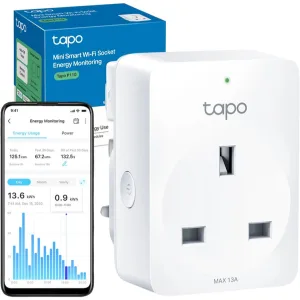
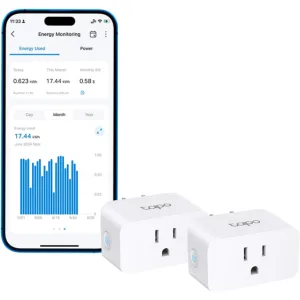
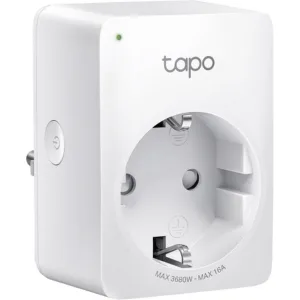
Estimated power draw gives you a starting point, but for accurate electricity cost estimates it’s best to measure actual consumption. These smart plugs and energy monitors let you track watts and kWh directly:
View on Amazon UK
View on Amazon US
View on Amazon DE
How to Find Your Local Electricity Tariff
Look at your electricity bill or your provider’s online account area for the unit rate (price per kWh). If you are on a time-of-use plan, use the rate that matches when you typically print, or estimate using an average. Note that some regions also include a standing charge or fixed daily fee, but this calculator focuses on the variable usage cost per kWh that scales with printing time.
Example Calculations of Popular 3D Prints
To give a clearer picture of real electricity costs, we tested a few common prints using typical power consumption values. Assuming a Creality K1 with an average power usage of 200W and an electricity rate of $0.30 per kWh, here is what the energy cost looks like:
– 3DBenchy (20 minutes / 0.33 hours) – 0.066 kWh used – $0.02
– Flexi Rex (2 hours) – 0.40 kWh used – $0.12
– Large decorative model (8 hours) – 1.60 kWh used – $0.48
FAQs
What should I enter as “average power draw”?
If you can measure it, use the average wattage during a normal print. If you cannot measure, start with a conservative estimate (for many printers this can be around 80–150W during printing) and adjust later after you confirm real consumption with a power meter.
Do enclosed or high-temperature prints cost more in electricity?
Usually, yes. Heated beds, higher nozzle temperatures, and actively heated chambers increase power draw, and long print times amplify the total energy used. The best approach is to measure a typical job with a power meter and then use that wattage as your baseline.
Is electricity a big part of total print cost?
Often it is smaller than material cost, but it becomes more noticeable with long prints, frequent production runs, or higher energy prices. Including electricity cost helps you price prints more accurately and avoid underestimating running expenses.
Related Tools on 3DWithUs
For a fuller estimate that includes materials and more print-related variables, use our 3D Print Cost Calculator here: 3D Print Cost Calculator.
Share Your Results on 3DWithUs Forum
Have questions? Feel free to ask in the comment section below. If you have measured real wattage numbers for popular printers, share your results on our forum so others can compare energy usage across machines and setups: 3DWithUs Forum.