Nexbie, a brand powered by Creality, offers a range of commercially produced 3D printed footwear featuring intricate lattice designs. Having followed developments in 3D printed footwear for several years, I was keen to put another pair to the test. This time, in addition to light exercise at home, I had an opportunity to wear them while walking around the exhibition halls at Formnext in Frankfurt. In this article, I take a closer look at Nexbie’s shoes, their design, manufacturing technology, flexibility and comfort in everyday use.
Table of Contents (Jump to a Section)
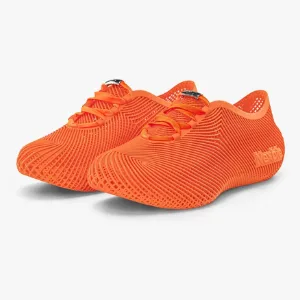
Where to Buy the Nexbie Aeroraise Sneakers
Price: $135.15 – $159.00
Available in Black, Purple, Orange, Green, Pink, White
Compare the Prices & Bundles:
Official Store
Nexbie 3D Printed Shoes Overview
Nexbie is a brand powered by Creality, a name particularly familiar to those involved in desktop 3D printing. It is interesting to see an established 3D printer manufacturer expanding into commercially produced 3D printed consumer products, including footwear.
How Are Nexbie Shoes 3D Printed?
Unlike many DIY 3D printed shoes made using flexible TPU filament on desktop FDM 3D printers, Nexbie takes a different approach using a flexible photopolymer resin. This manufacturing technology allows for the creation of complex lattice structures throughout the shoe.
According to Nexbie, the shoes are manufactured using ELASTO 1000, a flexible polyurethane-based elastomer, and HALS 3D printing technology, a DLP-based continuous photopolymerisation process. This allows the main body of the shoe to be printed in one piece, with different lattice geometries providing cushioning, flexibility and support where needed. The open lattice structure also allows air to circulate freely and water to drain easily.
Design, Fit and First Impressions
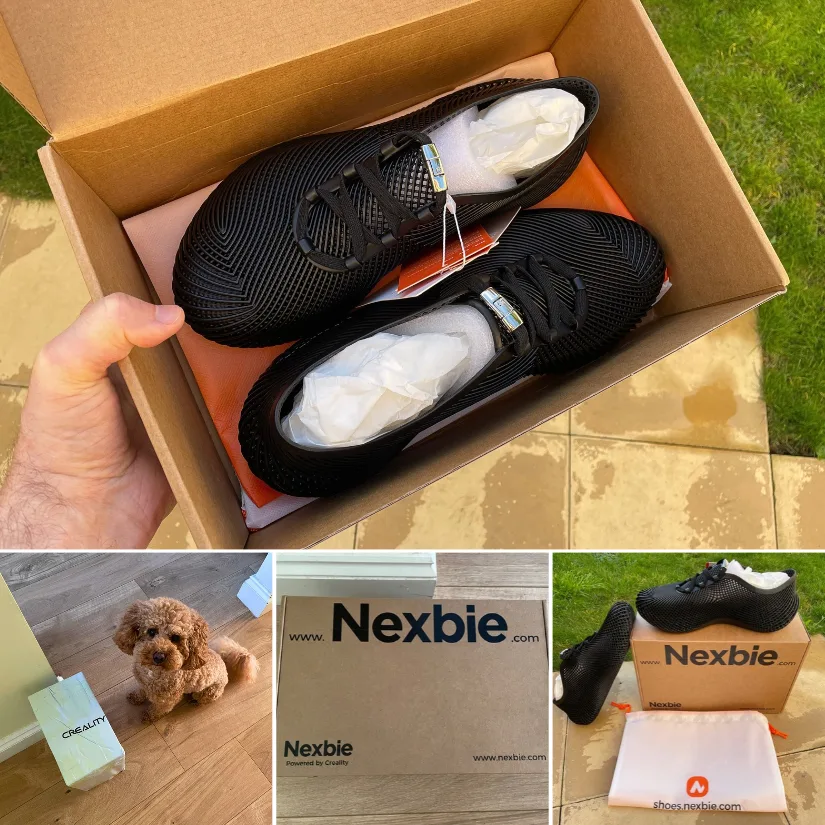
When the shoes arrived, the familiar Creality packaging immediately caught my attention. Inside was a branded Nexbie box containing the shoes and a drawstring bag. As usual, Teddy was around to assist with the unboxing and provide a sense of scale.
©3DWithUs – Photo: Max Funkner
The black lattice design looks futuristic without being overly extravagant. One of the smaller design details that caught my attention was the shiny silver element on the laces, which contrasts nicely with the otherwise black footwear.
Before choosing a pair, I found the size chart on the Nexbie product page particularly useful. Although my shoes were slightly loose, this did not cause any issues during testing. Both a 50-minute session on the cross trainer and a full day of walking around Formnext proved comfortable. Most importantly, I experienced no rubbing or blisters, something I often encounter when breaking in a new pair of leather shoes.
Hands-On Testing: Exercise and Flexibility
Before taking the Nexbie shoes to Formnext, I wanted to see how they would perform during my usual light exercise routine at home. A cross trainer and a few simple exercises provided an opportunity to get familiar with the shoes and observe how the lattice structure responds to different foot positions.
Cross Trainer Test
©3DWithUs – Photo: Max Funkner
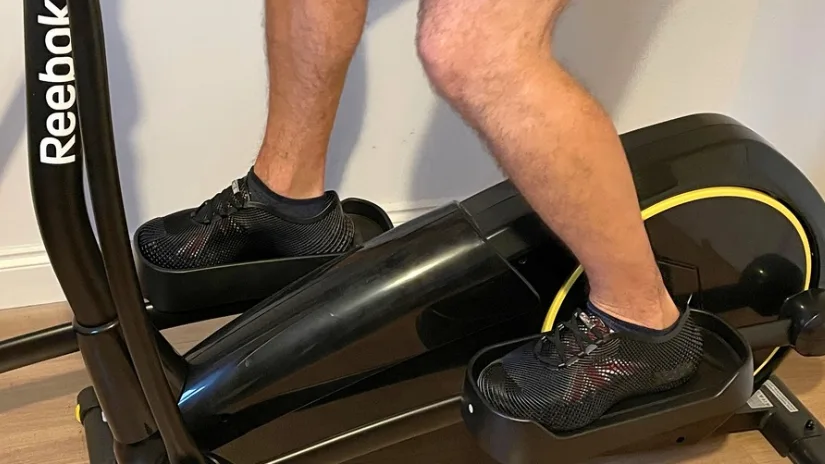
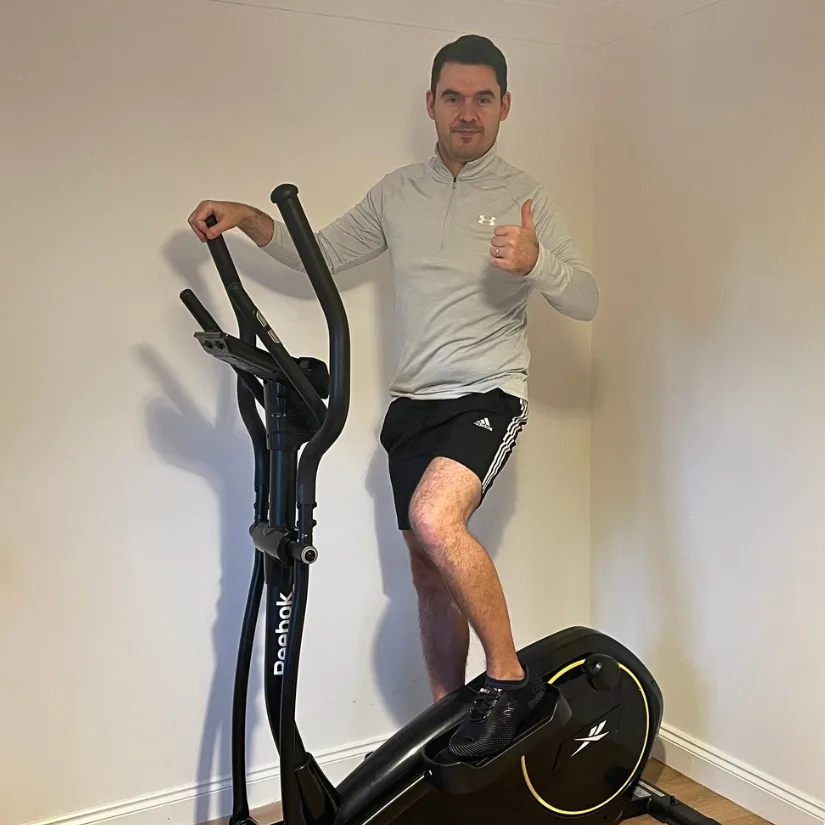
During the 50-minute cross trainer session, I particularly appreciated the excellent ventilation and cushioning provided by the lattice structure. My feet remained comfortable throughout the exercise.
©3DWithUs – Photo: Max Funkner
Flexibility Test
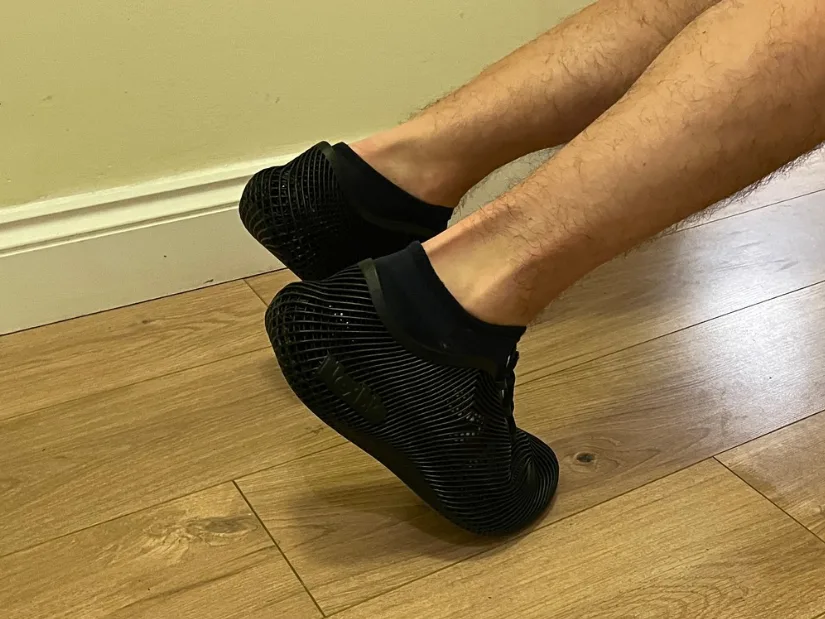
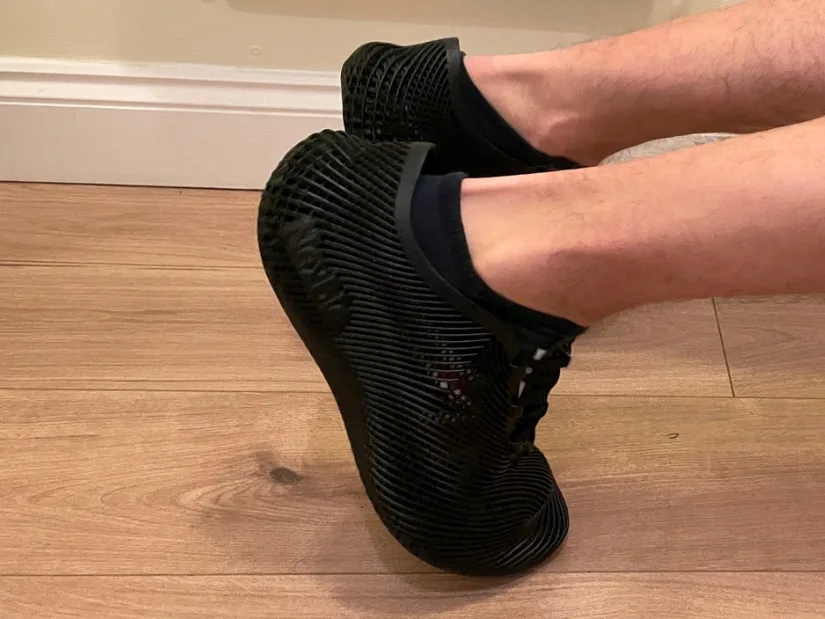
Another simple way to assess the flexibility of 3D printed footwear is to wear the shoes while doing push-ups. In this position, the front of the shoe bends while supporting part of the body weight, allowing me to observe how the lattice structure behaves under pressure.
©3DWithUs – Photo: Max Funkner
The rubber-like material also provided good grip on the wooden floor during push-ups, with no noticeable slipping, even when the front of the shoes was flexed under pressure.
©3DWithUs – Photo: Max Funkner
Hands-On Testing at Formnext
For the second year in a row, I had an opportunity to test commercially produced 3D printed footwear at Formnext in Frankfurt. Anyone who has attended this exhibition will know how much walking and standing is involved. With multiple exhibition halls, meetings and long hours on hard floors, it provides a particularly interesting real-world test for footwear.
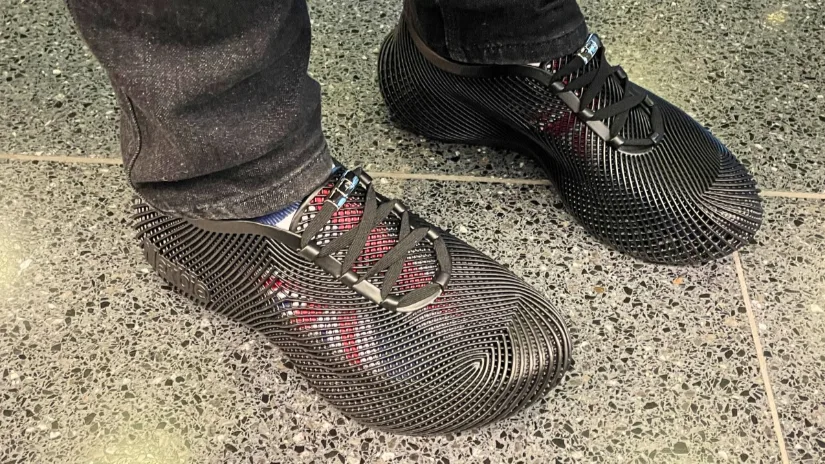
This time, I paired the black Nexbie shoes with my Union Jack socks, which were clearly visible through the open lattice structure.
©3DWithUs – Photo: Max Funkner
I was also pleased to meet the Nexbie team in person at Formnext. With 3D printed footwear becoming an increasingly noticeable application of additive manufacturing, I included Nexbie alongside other footwear developments in our annual Formnext Highlights.
Compared to the previous year, seeing exhibitors and visitors wearing 3D printed shoes at Formnext was no longer much of a surprise. However, they can still be a great conversation starter, particularly when discussing different printing technologies, materials and lattice designs. After a full day of walking around the exhibition halls, I was pleased with the overall comfort and breathability of the Nexbie shoes.
Following one of my social media posts from Formnext, I was asked whether the shoes were made from TPU and how they held up after walking around the exhibition halls. They held up very well, and, importantly, my feet survived without any issues.
©3DWithUs – Photo: Max Funkner
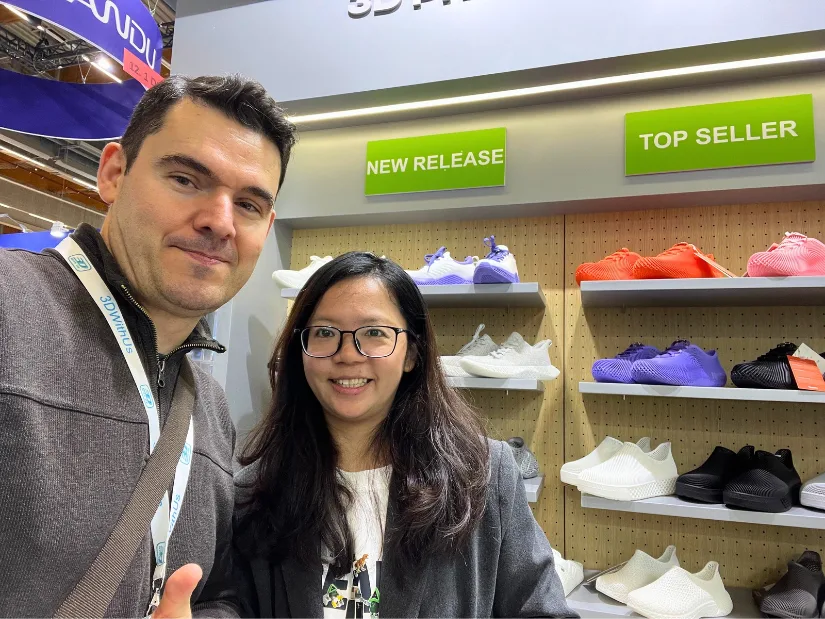
At Formnext 2026, I had an opportunity to meet the Nexbie team at the Creality booth and explore their wider range of 3D printed footwear. It was interesting to see the variety of designs and colours, from established bestsellers to newly released models.
©3DWithUs – Photo: Max Funkner
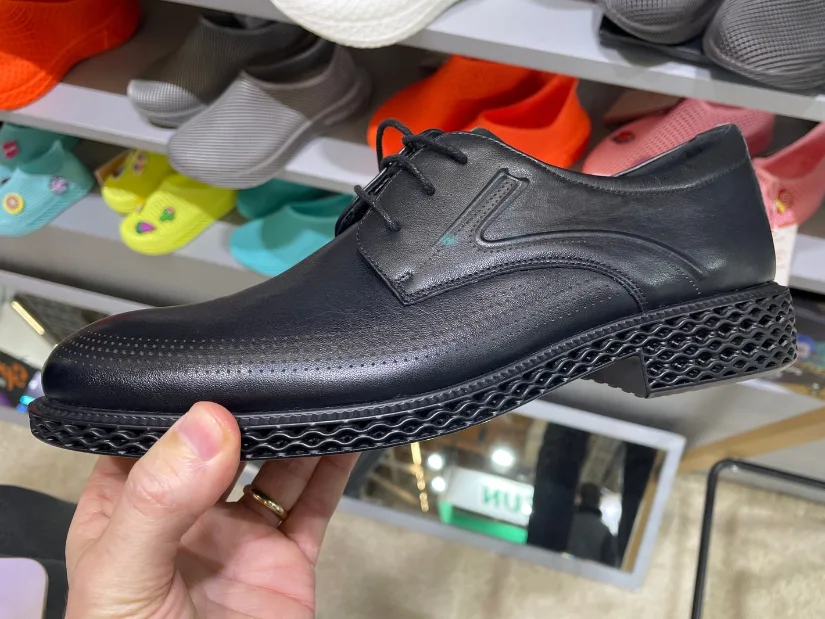
Toward the end of my visit, I also had a chance to look through more of Nexbie’s growing footwear collection. There was quite a wide range on display, and it would have taken much longer to properly inspect every model. One design that particularly caught my eye was a black formal-style shoe with a lattice sole. It looked like an interesting blend of classic and additive manufacturing design, and I could easily imagine it becoming a conversation starter at more official events.
Durability and Everyday Use
One known limitation of open lattice footwear is that sand, small stones and water can easily enter the shoes. Walking on a sandy beach, for example, may not be ideal. Therefore, weather conditions and the type of terrain should be taken into consideration when wearing them outdoors. However, walking on clean pavements and between the car park and the exhibition halls at Formnext presented no issues.
Pros and Cons
Pros:
- Distinctive 3D printed lattice design
- Comfortable during my Formnext walking test
- Open structure for ventilation
- Suitable for my cross-trainer and push-up exercise routine
Cons:
- Limited insulation in cold weather.
- Water and sand can enter through the lattice.
Conclusion
It is fascinating to see how commercially produced 3D printed footwear continues to evolve. Testing Nexbie shoes both at home and on the exhibition floor at Formnext gave me an opportunity to experience them beyond their visually impressive lattice design.
This particular pair of Nexbie shoes looks and feels cool. I especially liked how my Union Jack socks were visible through the open lattice structure. Having a collection of colorful ankle socks, I can already imagine experimenting with different combinations. Perhaps footwear designers working with 3D printing could consider not only the design of the shoes themselves but also how different sock colors and patterns could complement their lattice designs, adding another level of personalisation.
For more examples of commercially available and DIY 3D printed footwear, different manufacturing technologies and our other hands-on experiences, check out our comprehensive 3D Printed Shoes Guide.
Disclosure: This article is sponsored by Nexbie. The shoes were provided for hands-on testing. All observations and opinions are my own.