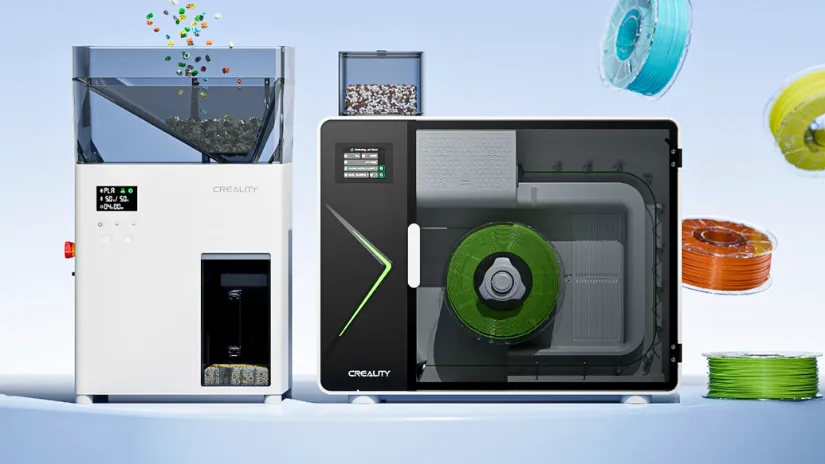
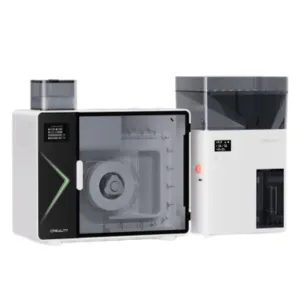
Creality is expanding beyond printers with the launch of two new products aimed at material reuse and small-scale filament production. The Creality Filament Maker M1 and Shredder R1 are designed to help makers process prepared 3D printing waste, experiment with custom material blends, and take more control over filament creation at the desktop level.
This is an interesting move because most desktop users still depend on ready-made filament, even though failed prints, support waste, and leftover material are common parts of the workflow. With M1 and R1, Creality is pushing into an area that many makers have talked about for years: turning plastic waste into a more useful part of the 3D printing cycle.
- What Is Creality M1 and R1?
- Filament Maker M1 Specifications
- Shredder R1 Specifications
- How the System Works
- Why It Is Interesting
- Who It May Suit
- About-Creality
- Launch and Availability
- Final Thoughts
Where to Buy
Bundle Price: From $899
Disclaimer: Crowdfunding campaigns – before taking part in any campaign as a backer, please read the T&Cs. Rewards aren’t guaranteed.
In the past, Creality successfully fulfilled crowdfunding campaigns.
Creality 3DPrintMill(CR-30) (June 2021): 7,388 backers pledged $7,850,866
What are Creality M1 and R1?
The system consists of two separate units that work together. The Shredder R1 is designed to process properly prepared 3D printing waste into reusable material. The Filament Maker M1 then mixes, extrudes, and spools filament for future use.
Rather than presenting this as a fully automated one-click recycling solution, the idea seems to be much more hands-on. Creality is positioning the setup as a compact desktop workflow for users who want to experiment, refine materials, and better understand what goes into filament production.
Filament Maker M1 Specifications
- Machine size with hopper: 570 × 245 × 555 mm
- Weight: 15 kg
- Supported materials: PLA, PETG, ABS, PA, PC, PET, ASA, TPU, CF-filled, GF-filled
- Max output: 1 kg/h at PLA
- Filament diameter: Virgin 1.75 mm ± 0.05 mm, Recycled 1.75 mm ± 0.1 mm
- Power supply: AC 100 to 240V, 50/60Hz, max 1600W, average 800W
- Display: 3.2 inch touchscreen
- Manual assist tool: Filament pulling cart included
- Heater power: Max 1200W
- System updates: OTA and USB
- Filtration: HEPA and activated carbon
- Cooling power: 8 turbo fans, 7W each
- Heating zones: 3 independent zones for feed, melt, and extrude
- Temperature range: 120°C to 350°C
- Production monitoring: Real-time diameter control, output tracking, adaptive pulling, adaptive spooling
- Safety alerts: Metal detection in feed, material shortage detection, clogging detection, spool jam detection
Shredder R1 Specifications
- Machine size with hopper: 345 × 280 × 560 mm
- Weight: 13 kg
- Raw material hopper capacity: 1 kg of PLA purge waste
- Shredded material hopper capacity: 1 kg of PLA
- Power supply: US AC 100 to 120V, 50/60Hz, EU AC 200 to 240V, 50/60Hz
- Max power consumption: 840W
- Shredding capacity and size: 3 kg/h, ≤ 4 mm
- Shredding system: Dual-shaft hardened steel blades, A4 steel, 650W AC motor, 60Nm high torque
- Heating and drying: 6W axial fan, AC PTC heater 100W, max 70°C
- Display: 65 × 40 mm color segment display
- Safety system: Lid-open auto stop for shredder and hopper, physical emergency stop, USB safety lock
- Automation monitoring: Auto full detection, anti-jam auto reverse protection
How the System Works
In simple terms, the R1 handles waste preparation, while the M1 focuses on filament creation. Together, they bring several normally separate steps of material reuse into a more compact maker-oriented setup.
According to the press release and demo video from YouTube, the workflow is intended to support material reuse, small-batch production, color and additive experimentation, and greater control over print outcomes. That makes it less about mass production and more about giving advanced users a chance to test, tweak, and create filament in-house.
Why It Is Interesting
What makes this launch stand out is not just the hardware itself, but the direction behind it. Desktop 3D printing has become more accessible over the years, but filament itself has remained mostly fixed as a bought-in material. Creality is now exploring the next step, where users do not just print objects, but also shape the material they print with.
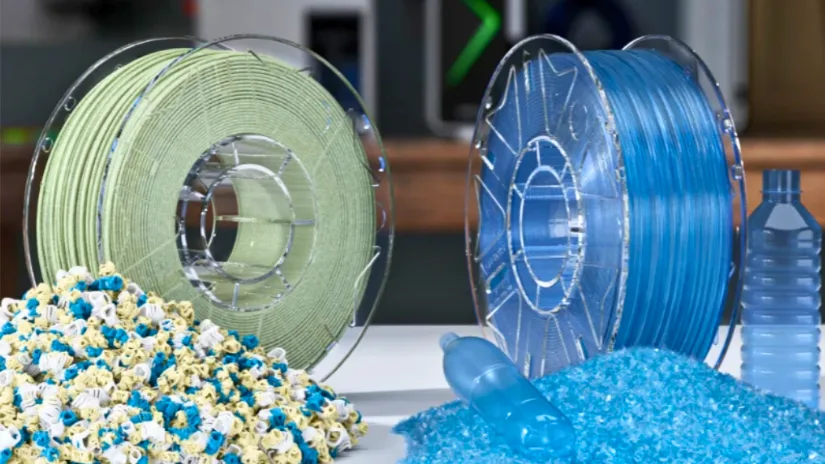
For makers, schools, labs, and workshops, this could open up several interesting possibilities. It may help reduce material waste, lower long-term filament costs in some scenarios, and encourage more experimentation with blends, colors, and additives. It also adds an educational angle, as users can better understand the full material cycle behind desktop 3D printing.
Who It May Suit
At this stage, Creality M1 and R1 look most relevant to hands-on users who enjoy testing new workflows, rather than to those looking for the simplest plug-and-play setup. This could include experienced makers, educational environments, small workshops, content creators, and anyone interested in recycling and material development within desktop 3D printing.
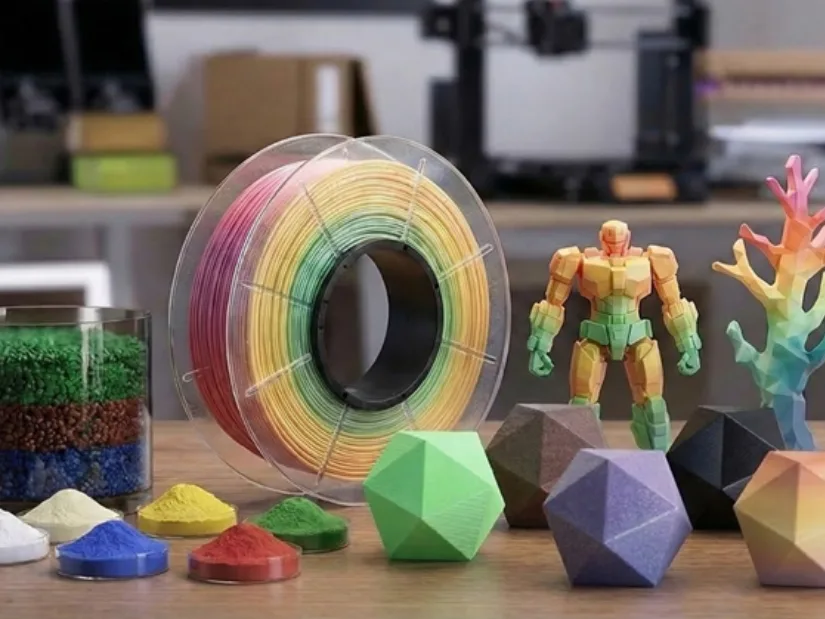
It will also likely appeal to users who already generate a lot of printing waste and want to explore whether part of that material can be reused in a practical way. As with many first-generation systems, the real value will probably come from experimentation, process refinement, and seeing how well the workflow performs in everyday use.
About Creality
Creality is one of the best-known brands in desktop 3D printing, with a product range that now stretches far beyond entry-level machines. Over the years, the company has expanded into resin 3D printers, laser engraving systems, scanners, and broader maker-focused tools, building an ecosystem that serves hobbyists, educators, and more advanced users alike. Its products are widely recognised for making digital manufacturing more accessible to a wider audience.
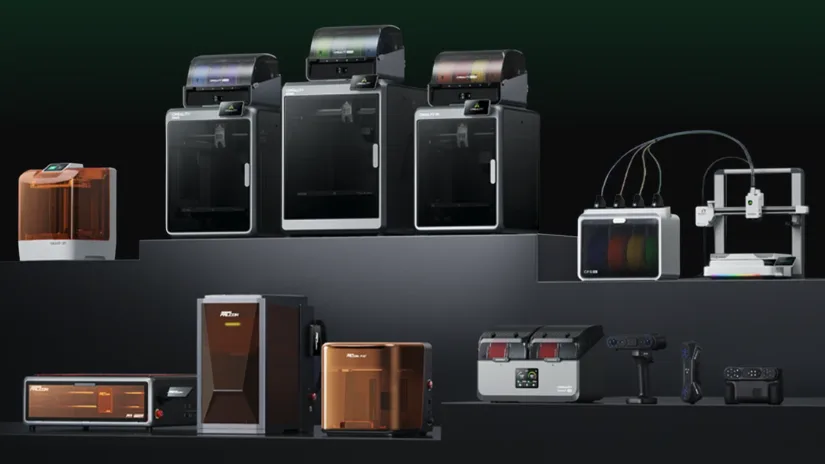
Creality products can also be seen regularly at major industry events, either on the company’s own stand or through local resellers and distribution partners. The Filament Maker M1, for example, was already being shown at TCT Asia 2026, suggesting that this new recycling system is already part of Creality’s wider product tour and public showcase strategy.
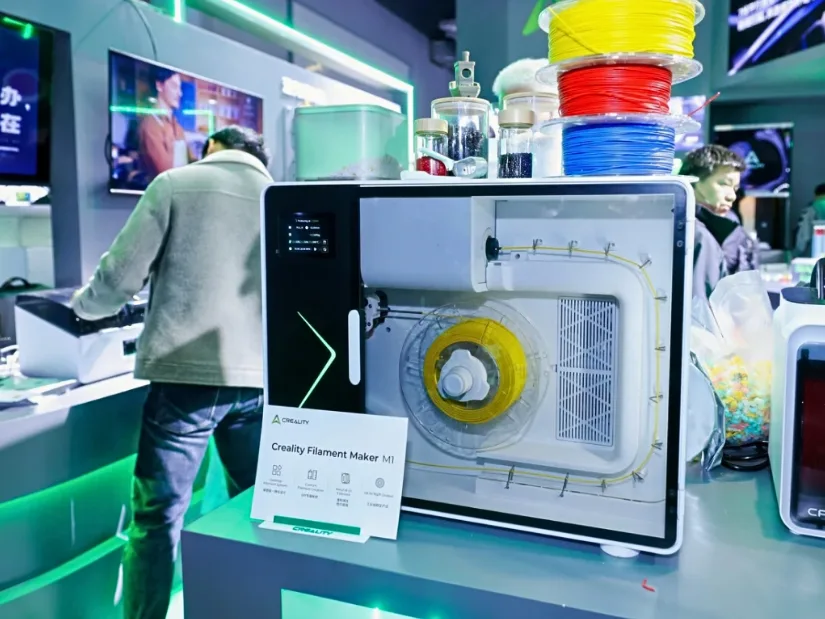
Many makers will know Creality through products such as the Ender 3 series and the CR-30 belt printer, both of which helped push new ideas into the desktop 3D printing space. On 3DWithUs, we have hands-on tested and featured many Creality products over the years, from printers to 3D scanners and laser cutters. You can browse more of our Creality coverage here: Creality articles on 3DWithUs.
Launch and Availability
Creality has launched the Filament Maker M1 and Shredder R1 through an Indiegogo campaign, with early access pricing mentioned for first backers. As this is intended to be an evergreen launch article, this section can be updated later with retail pricing, shipping progress, hands-on testing, or newer versions such as M2 or R2.
Creality Filament Maker M1 and Shredder R1 on Indiegogo
Final Thoughts
With M1 and R1, Creality is entering a part of the 3D printing workflow that has often been discussed but rarely packaged for desktop users in such a direct way. Instead of focusing only on faster printing or larger build volume, this launch shifts attention toward material reuse, experimentation, and control.
If Creality continues building this category in the future, this could become more than a one-off launch. It may grow into a wider ecosystem around desktop filament production and recycling, giving makers new ways to reduce waste and get more involved in the materials behind their prints.