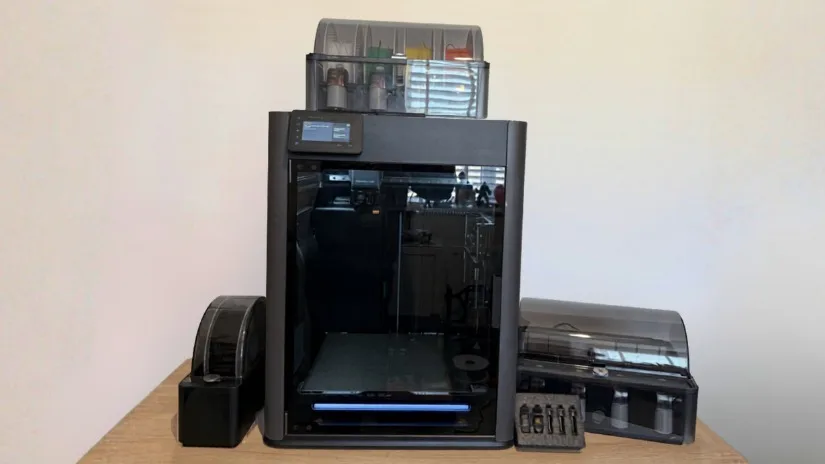
I have been following Bambu Lab’s development of multi-color printing for some time, and the H2C is an interesting step forward. Rather than relying entirely on repeated filament purges through a single hotend, it introduces the Vortek hotend-changing system. I have been using the H2C for a selection of colorful display prints and practical workshop accessories, including a seven-color melting Rubik’s Cube, a racing car and an AMS storage setup.
In this hands-on look, I will show the mechanism inside the printer and the objects I have printed so far. These are examples from my machine, not a controlled comparison of speed, waste, or reliability against other printers. In the end, as usual, I’ll cover the conclusion and Pros and Cons.
Table of Contents (Jump to a Section)
Where to Buy the Bambu Lab H2C
Price: $1,899 – 2,199
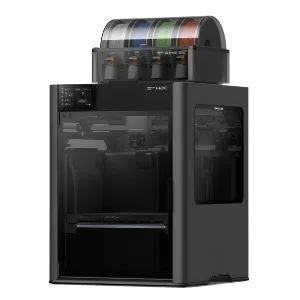
The filaments are sold separately
Compare the Prices & Bundles:
Official Website
Overview
The H2C is a fully enclosed CoreXY printer built around Bambu Lab’s approach to automated printing. Its most unusual feature is the combination of a conventional left nozzle and a right-side toolhead that can exchange between six Vortek hotends. That creates up to seven dedicated nozzle paths for seven colors or materials. With compatible AMS units connected, the printer can manage a much larger filament selection, although printing with more than seven materials can still require purging and additional filament management.
The machine offers a 305 × 320 × 325 mm single-nozzle build volume, up to 350°C nozzle temperature, a 120°C heated bed and active chamber heating up to 65°C. Those published figures make it suitable for more than decorative PLA prints. This machine can easily print with engineering-grade materials.
Vortek Hotend Change System
The Vortek mechanism is what makes the H2C different. Inside the printer, there is a storage and exchange assembly for six interchangeable right-side hotends. Instead of flushing every previous color through a single nozzle, the machine can collect a hotend assigned to that filament. This is designed to reduce color contamination and purge waste, particularly when a print stays within the seven available nozzle paths.
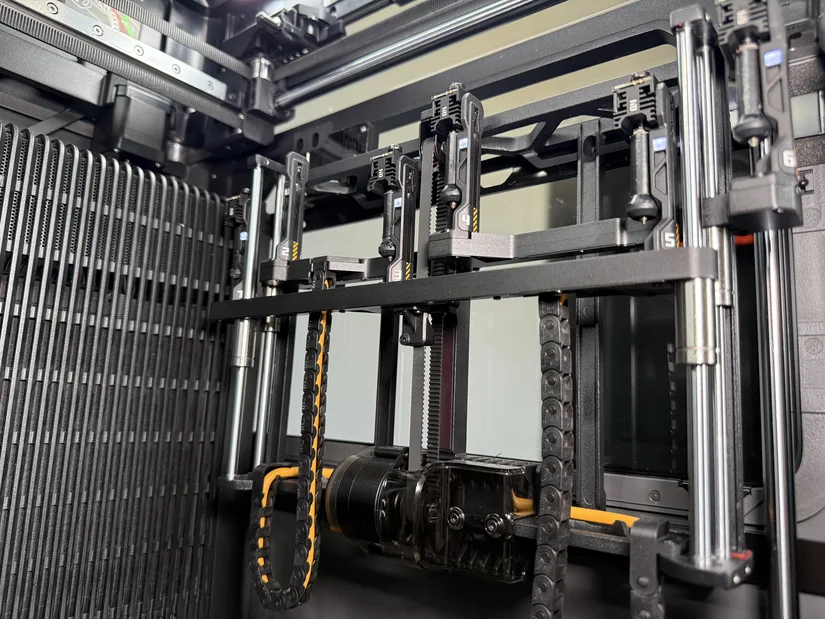
©3DWithUs – Photo: Richard Hirst
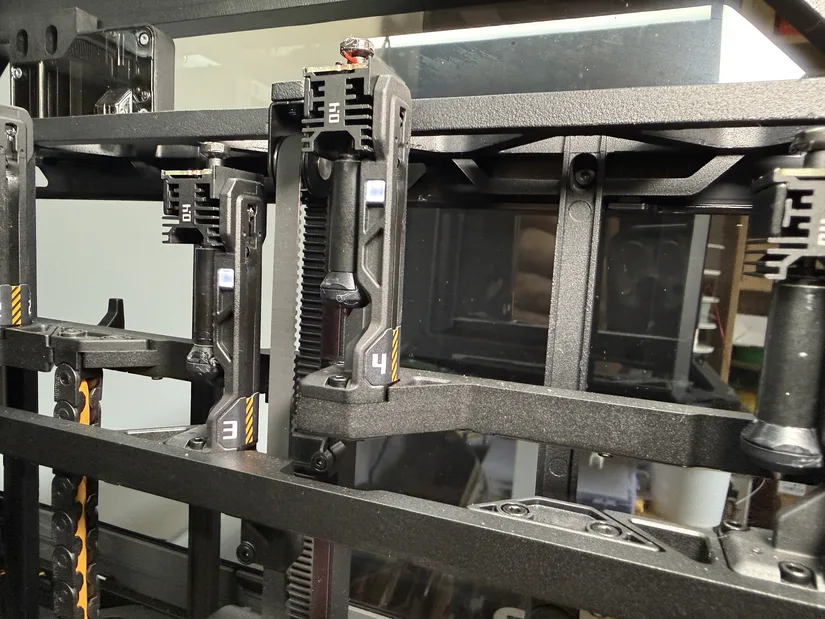
©3DWithUs – Photo: Richard Hirst
The hotends supplied with my Ultimate kit are shown below alongside the conventional nozzles. The system may look complicated at first, but the important point is that the printer handles the nozzle selection and exchange automatically. It is worth checking the exact package contents when buying, because the combination of supplied hotends and AMS accessories varies by bundle.
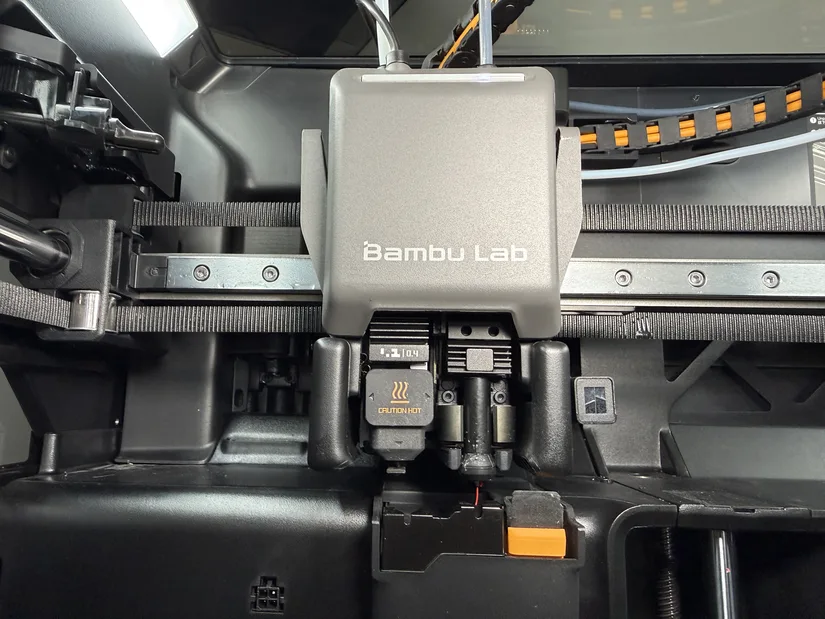
©3DWithUs – Photo: Richard Hirst
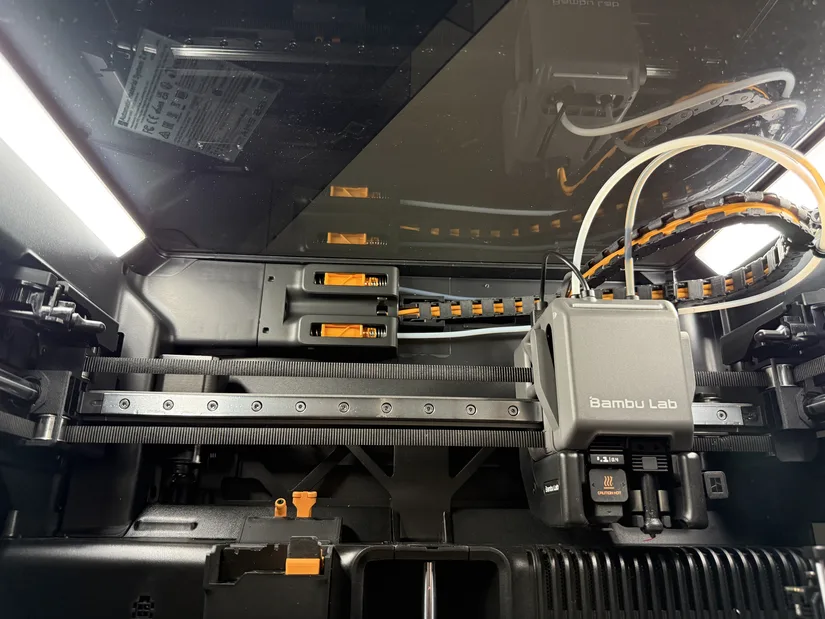
©3DWithUs – Photo: Richard Hirst
Bambu Lab’s Vortek system uses contactless connections and induction heating, allowing the hotends to heat up in just 8 seconds. This makes switching between colors and materials particularly efficient. The concept is particularly attractive for complex color projects like the melting cube later in this article.
Printer Features and Software
The H2C also has the features expected from a modern enclosed machine, including automatic calibration, a touchscreen interface, chamber temperature controls and airflow management. The screen gives a useful overview of the nozzle, chamber, heated bed and motion settings.
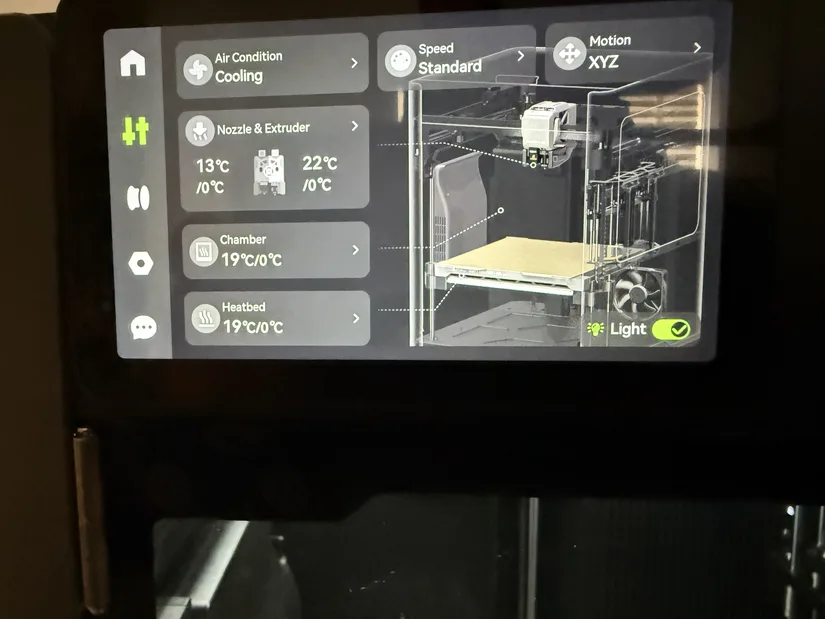
©3DWithUs – Photo: Richard Hirst
Inside the enclosure, I photographed the rear extraction area and the side auxiliary fan. These are important parts of the printer’s thermal and airflow system, especially when changing from simple PLA jobs to materials that need a warmer, more controlled printing environment.
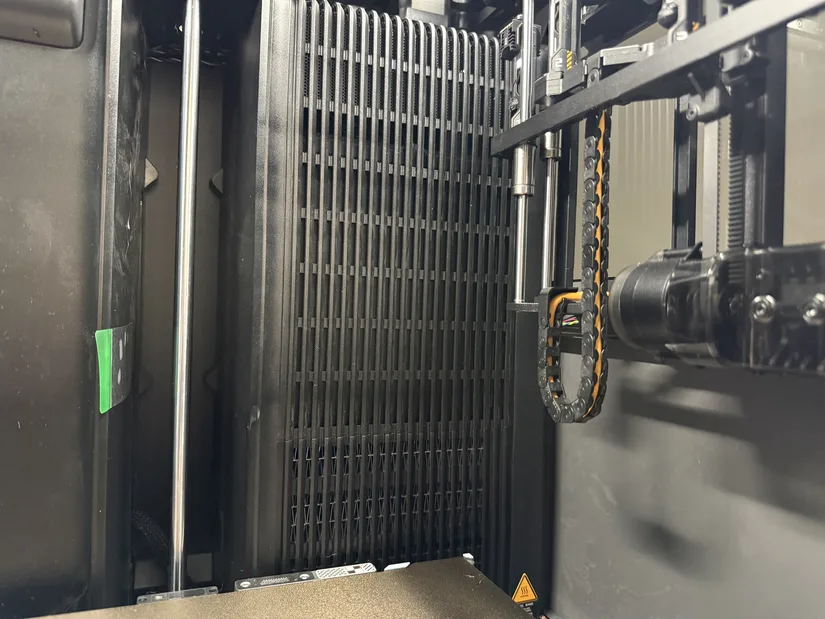
©3DWithUs – Photo: Richard Hirst
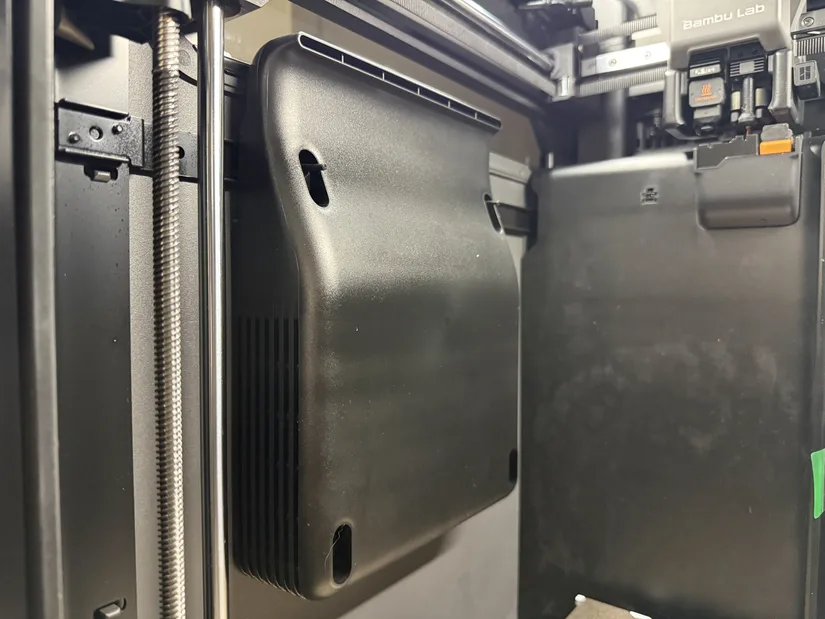
©3DWithUs – Photo: Richard Hirst
For model preparation, Bambu Studio brings together slicing, color and material assignments, print profiles and AMS management. My focus was on projects that demonstrate why several colors and automated filament handling are useful in everyday printing.
Test Models
The following projects show how I have been using the H2C, from colorful display pieces to practical accessories for the AMS setup.
Model 1: Multicolor Racing Car
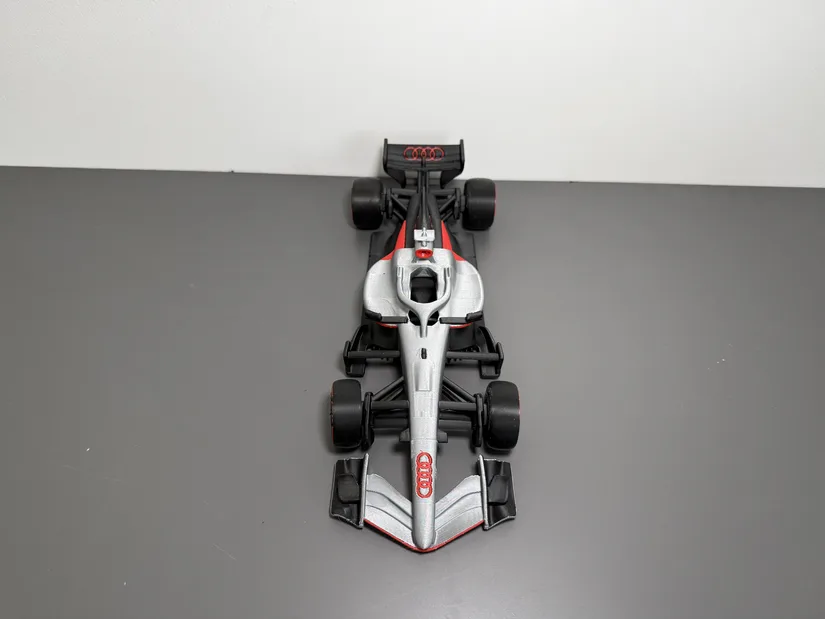
One of the first models I photographed was a Formula-style racing car, finished mainly in metallic-looking grey, black and red. It is a good showcase for a multi-part model: the bodywork, wheels, rear wing, and small details all contribute to the final appearance. Compared with a simple single-color print, the contrasting parts give it much more character.
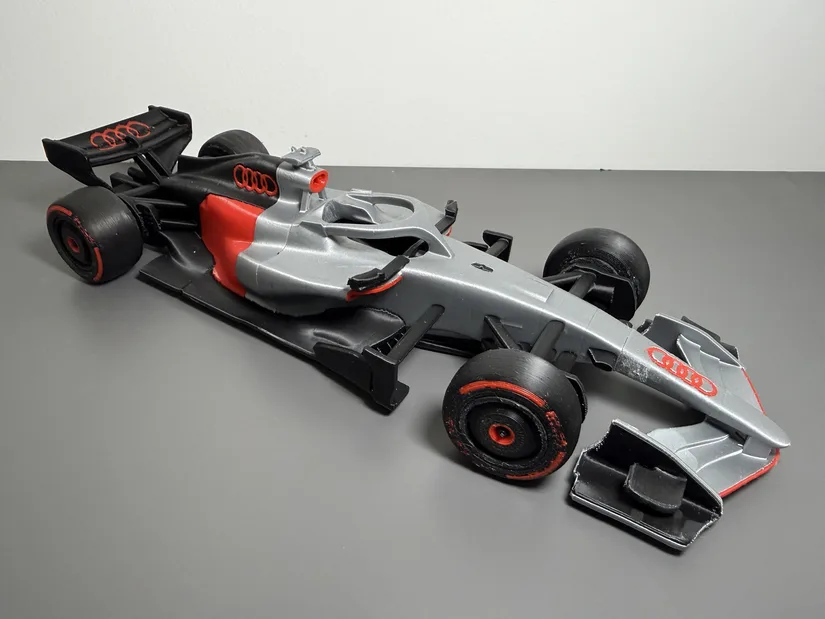
©3DWithUs – Print & Photo: Richard Hirst
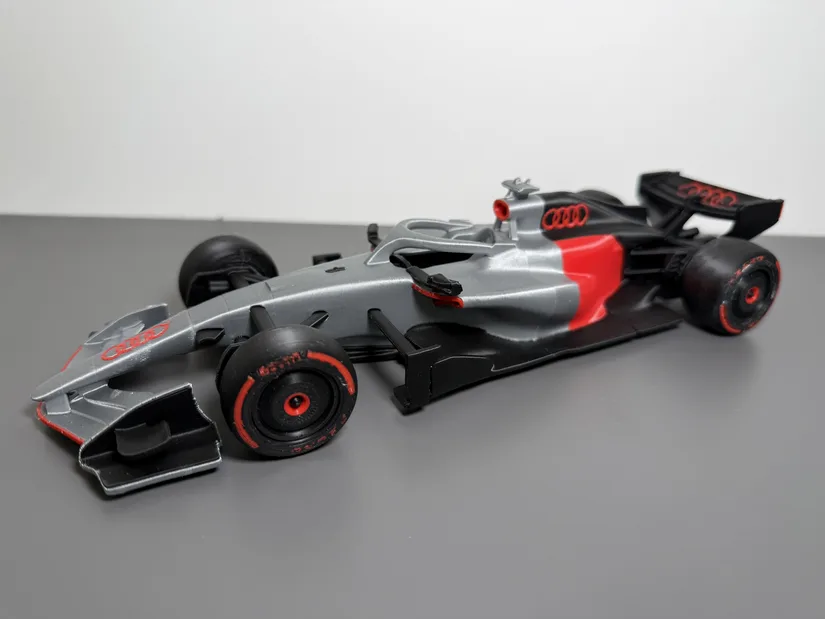
©3DWithUs – Print & Photo: Richard Hirst
©3DWithUs – Photo: Richard Hirst
The racing car design is credited to SAMPAN on MakerWorld.
Model 2: Seven-Color Melting Rubik’s Cube
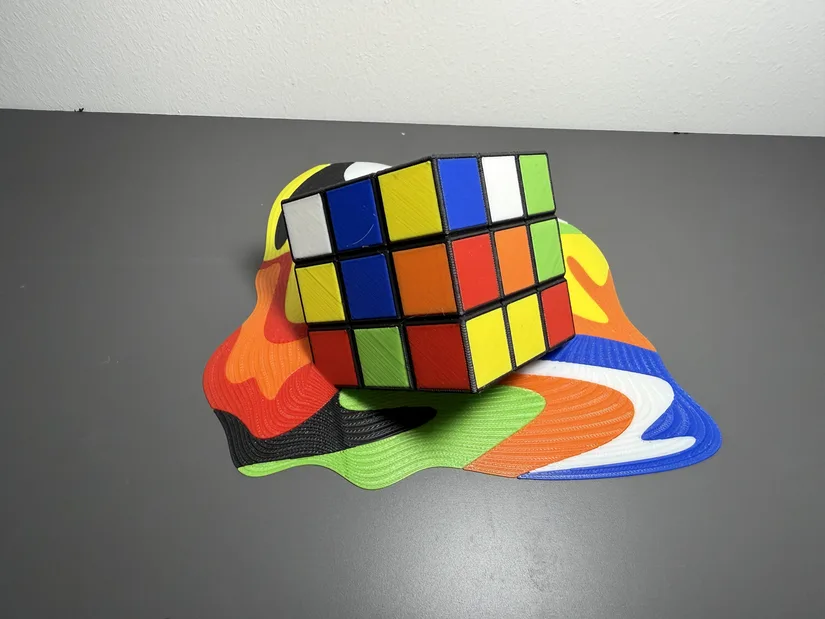
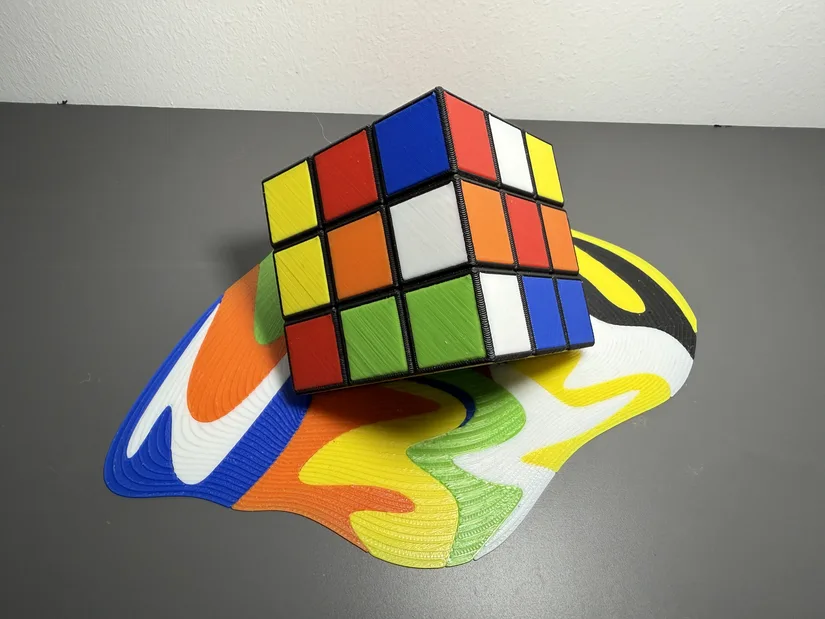
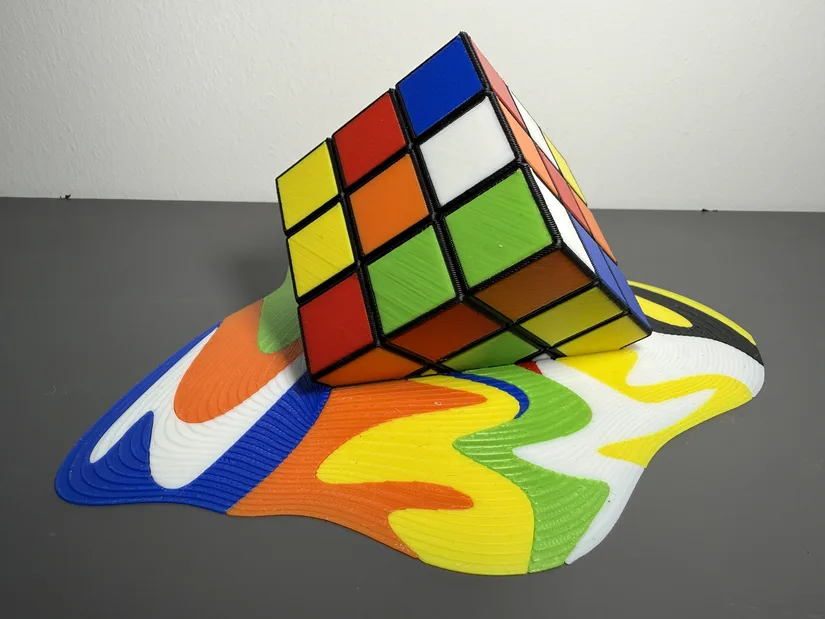
This print best demonstrates what I wanted to try with the H2C. I printed a melting Rubik’s Cube in seven colors, using all seven nozzle paths across the left and right sides of the printer. My setup used two AMS 2 Pro units and an AMS HT supplying the left nozzle. It is exactly the kind of job where having several ready-to-use hotends makes sense.
©3DWithUs – Print & Photo: Richard Hirst
©3DWithUs – Photo: Richard Hirst
©3DWithUs – Photo: Richard Hirst
For this project, I used the Melting Rubik’s Cube – Multicolor 7 Colors – H2C remix by xchris on MakerWorld. A related design, Melting Rubiks Cube – 7 Colors H2C by Kris_Chin Makes 3D, is also available. The two are separate model listings.
Model 3: Heart Lamp
For a completely different project, I also printed a heart-shaped illuminated lamp. The soft pink and warm orange glow change the appearance of the same printed shape, making this a nice example of how lighting can bring a simple model to life. It is the sort of print that works well as a gift or seasonal decoration.
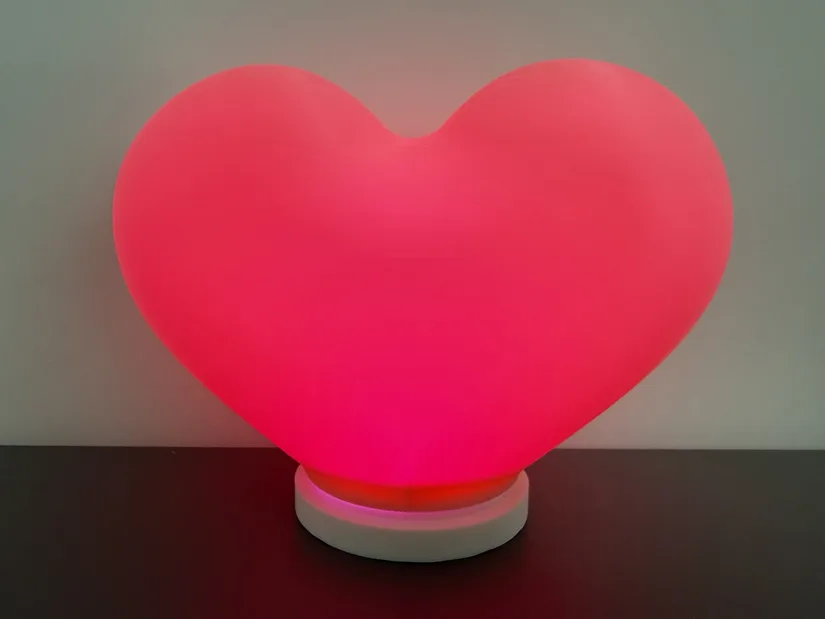
©3DWithUs – Print & Photo: Richard Hirst
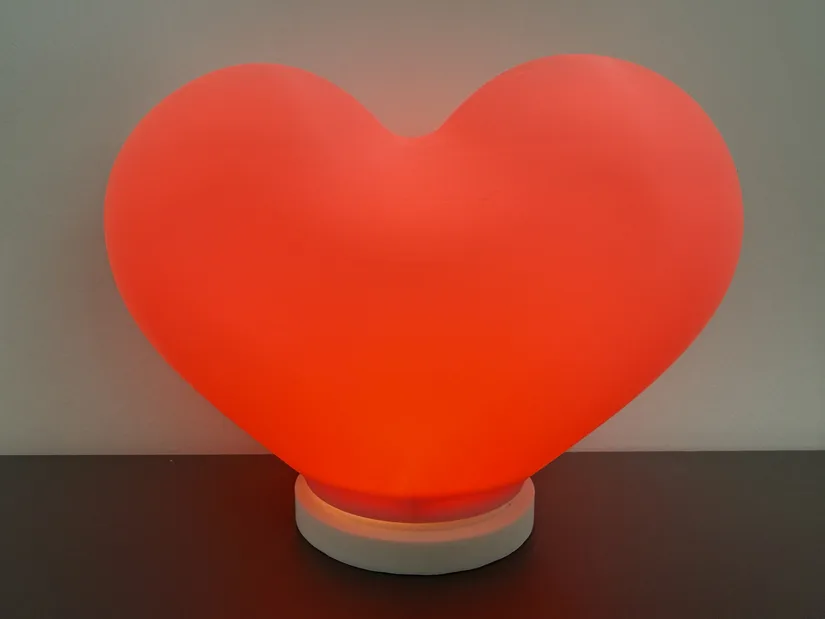
This project will also be useful for an update to our Valentine’s Day 3D printing ideas guide.
Model 4: AMS Storage and Accessories
For this setup, I used several modular designs by Willi 3D, including the Compact AMS Stacking Solution, BaBo Duo Plate Module H-Series, and BaBo Duo Organizer Mono Drawer Module 30. These components work together to create a practical storage system for the AMS units, build plates, and accessories.
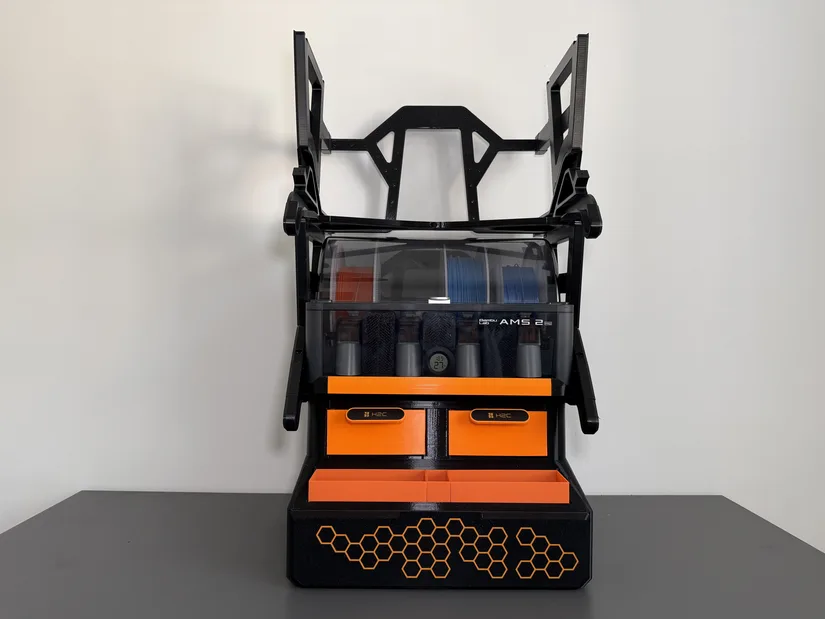
©3DWithUs – Photo: Richard Hirst
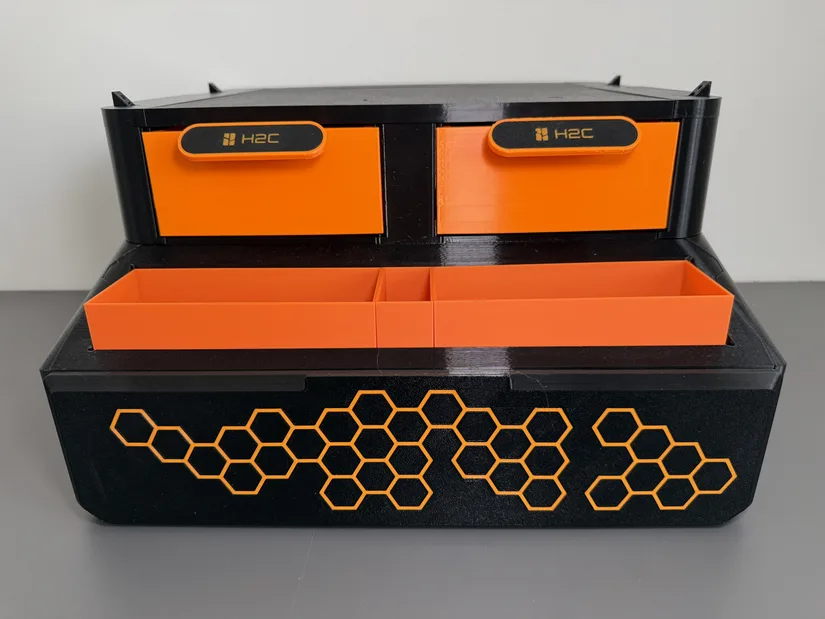
©3DWithUs – Photo: Richard Hirst
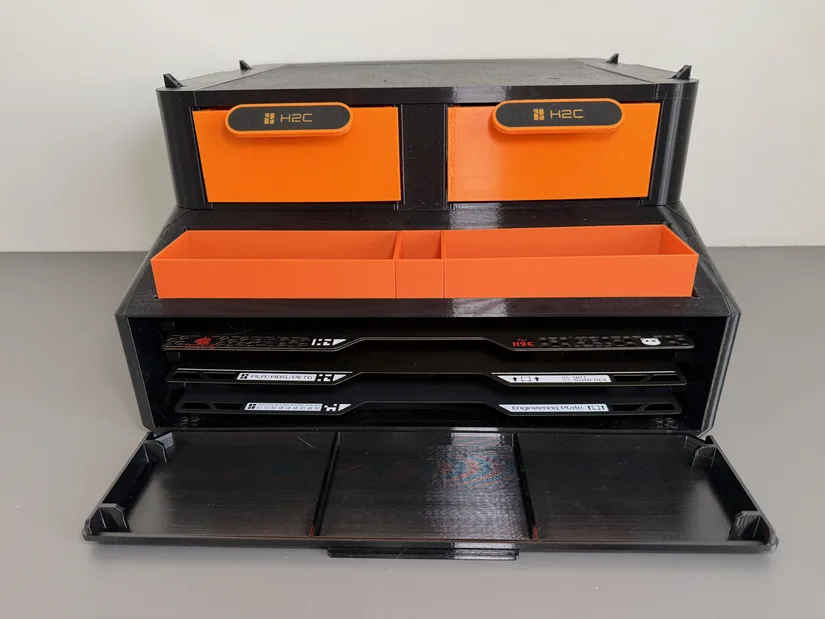
©3DWithUs – Photo: Richard Hirst
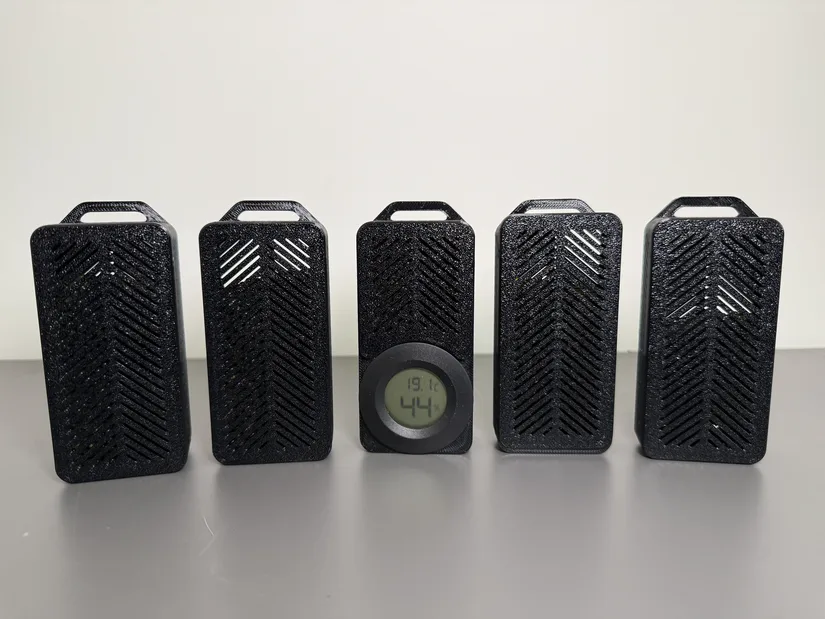
©3DWithUs – Photo: Richard Hirst
I also printed several AMS 2 desiccant boxes, an uncomplicated practical addition to the setup. The supplied screenshot calls this model AMS 2 Desiccant Box (no Spool Removal required) by Simple.
Model 5: LEGO-like and Hooded Spider-Man
I also printed two Spider-Man figures in very different styles. The first is a large LEGO-style character featuring the familiar red and blue costume, while the second is a more detailed hooded Spider-Man with a black jacket and sneakers.
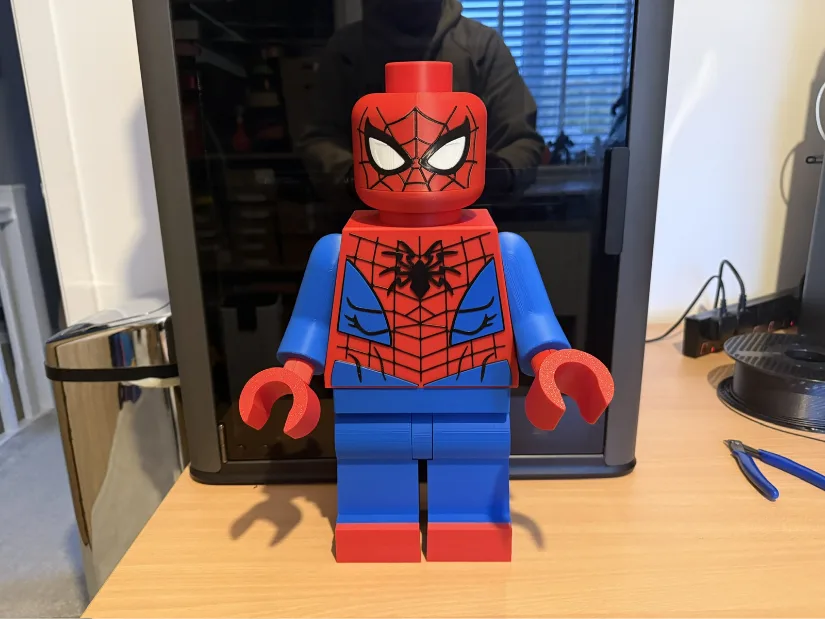
©3DWithUs – Print & Photo: Richard Hirst
Design: Classic Spiderman BRICK modular Figure 16 by BIG3DS on MakerWorld.
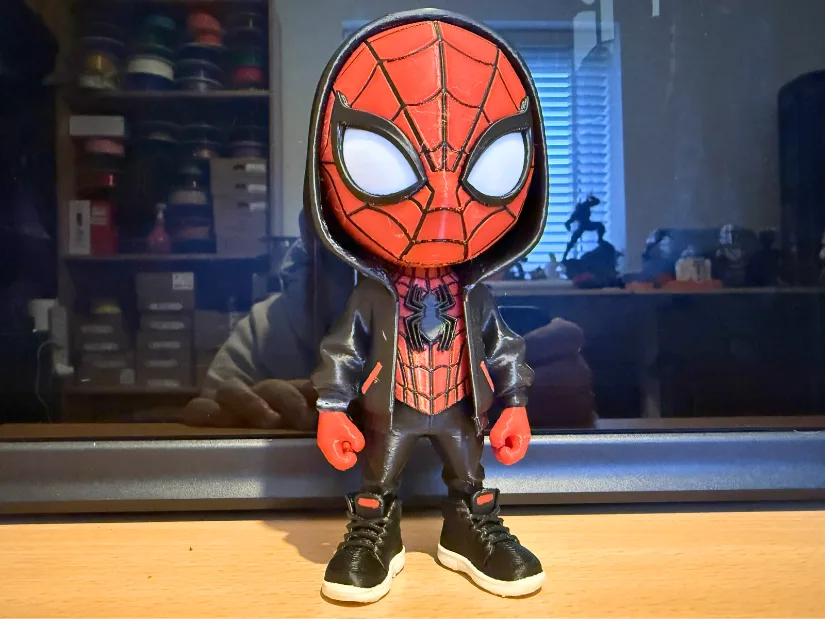
©3DWithUs – Print & Photo: Richard Hirst
Both are good examples of how multicolor 3D printing can bring character models to life, from the clean color separation on the larger figure to the smaller details on the hooded version. They also make a nice addition to my growing collection of 3D printed display models.
Other Test Prints
Alongside the finished display models, I have also been printing parts for the SUNLU Maker Kit RC Car. This project demonstrates how the H2C can be used for practical, functional components rather than just decorative prints. The printed parts are shown before assembly, offering another example of the variety of projects I’ve been working on.
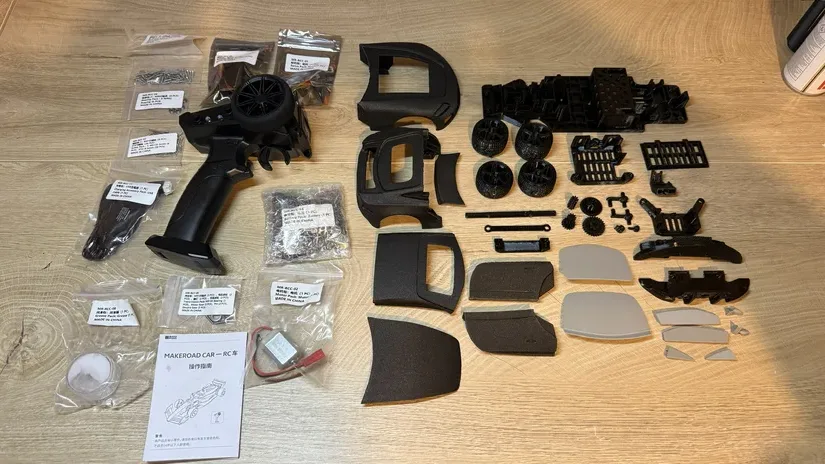
©3DWithUs – Photo: Richard Hirst
I also photographed a collection of brick-style Star Wars-inspired figures. They are another good example of small printed character pieces where color and presentation matter, but I do not have verified model credits for these designs.
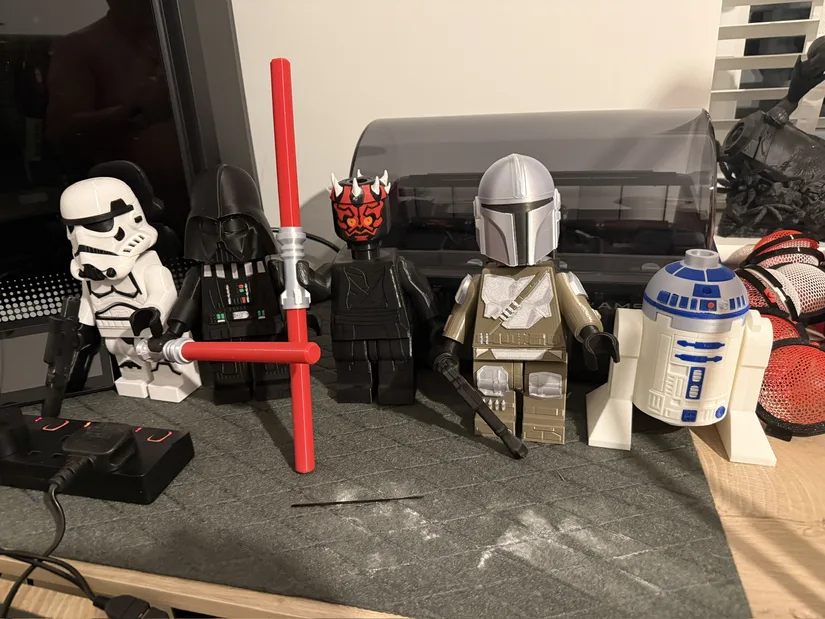
©3DWithUs – Photo: Richard Hirst
Compare to Other 3D Printers
To put the Bambu Lab H2C into perspective, we can look at two other Bambu Lab printers previously tested by 3DWithUs. The Bambu Lab A1 Combo offers a more affordable entry into multicolor printing with its AMS lite system and open bed-slinger design. The Bambu Lab P1S Combo moves to an enclosed CoreXY platform with a conventional AMS system. Both rely on filament changes through a single nozzle, whereas the H2C introduces its Vortek hotend-changing system, providing a different approach to multicolor printing and reducing the need for repeated purging.
Another interesting comparison is the Creality K2 Pro Combo, which we tested with two CFS units for eight-color printing. Like the H2C, it is an enclosed CoreXY machine aimed at more demanding printing projects. However, the K2 Pro uses a single nozzle with automatic filament switching, which generates purge waste during color changes. The H2C’s Vortek system takes a different approach by changing hotends instead. Both machines offer advanced multicolor capabilities, but their filament handling systems are fundamentally different.
The Snapmaker U1 is particularly relevant because it also tackles the problem of filament waste through toolchanging. Rather than exchanging individual hotends, the U1 uses four complete toolheads, each with its own filament path. This allows fast changes between four colors without the extensive purging associated with conventional single-nozzle systems. The Bambu Lab H2C uses a more compact approach with six interchangeable Vortek hotends alongside its additional nozzle, allowing up to seven dedicated filament paths. Both demonstrate how multicolor printing is moving beyond traditional filament-switching systems.
For readers who do not need this level of multicolor capability, there are plenty of more affordable alternatives. Our regularly updated Best Budget FDM 3D Printers Guide features hands-on reviews and comparisons across a wide range of machines, from beginner-friendly printers to more advanced enclosed models.
Have questions? Feel free to ask in the comment section below.
For a wider discussion or to share your own Bambu Lab H2C prints, join us in the forum:
Conclusion and Pros & Cons
The filaments are sold separately
Compare the Prices & Bundles:
Official Website
Review Summary
After more than six months of using the Bambu Lab H2C, I can say that the Vortek system is what makes this printer particularly interesting to me. Having six interchangeable induction-heated hotends alongside the additional nozzle opens up new possibilities for multicolor printing. With hotends heating up in just eight seconds, the whole concept is impressive, especially compared with conventional single-nozzle filament switching. It is exciting to see Bambu Lab taking a different approach to reducing filament waste.
I’ve certainly enjoyed putting the H2C to work on a variety of projects. My seven-color melting Rubik’s Cube, printed using all seven nozzle paths, was a particularly good demonstration of what the machine can do. The racing car, heart lamp, Spider-Man figures and practical AMS storage accessories also show its versatility. I particularly like being able to move between colorful display models and useful workshop projects without limiting myself to simple single-color prints.
Of course, all this technology comes at a price. Starting at around from $1,899, with more comprehensive AMS bundles costing considerably more, the Bambu Lab H2C is firmly positioned in the premium 3D printer category. Whether that investment makes sense depends on how often you print in multiple colors and how much you value the Vortek system. For occasional multicolor projects, there are certainly more affordable alternatives, but for makers regularly working with complex models, the H2C offers some exciting possibilities.
There is also another side of this machine that I haven’t explored yet. With its 350°C hotends, actively heated chamber and support for engineering-grade materials such as ABS, ASA, PC and carbon-fiber-reinforced filaments, the H2C has potential well beyond the decorative prints featured here. I would like to investigate those capabilities in future testing, along with long-term reliability, printing speeds and actual filament waste. For now, my experience has mainly been about discovering what the Vortek system can offer, and I have plenty more projects in mind.
Pros
1. Innovative Vortek system with six interchangeable, induction-heated hotends.
2. Excellent versatility, from detailed multicolor figurines to functional RC parts and accessories.
3. Enclosed CoreXY design with active chamber heating and engineering-grade material support.
4. Advanced AMS integration, automation and user-friendly Bambu Studio software.
5. Seamless integration with MakerWorld for easy access to a wide variety of ready-to-print 3D models.
Cons
1. Premium price, especially when adding extras.
2. Complex Vortek mechanism introduces more components and potential maintenance requirements.
3. Seven-color printing requires additional filament handling equipment and investment.
4. Filament purging is reduced, not completely eliminated, particularly beyond seven materials.