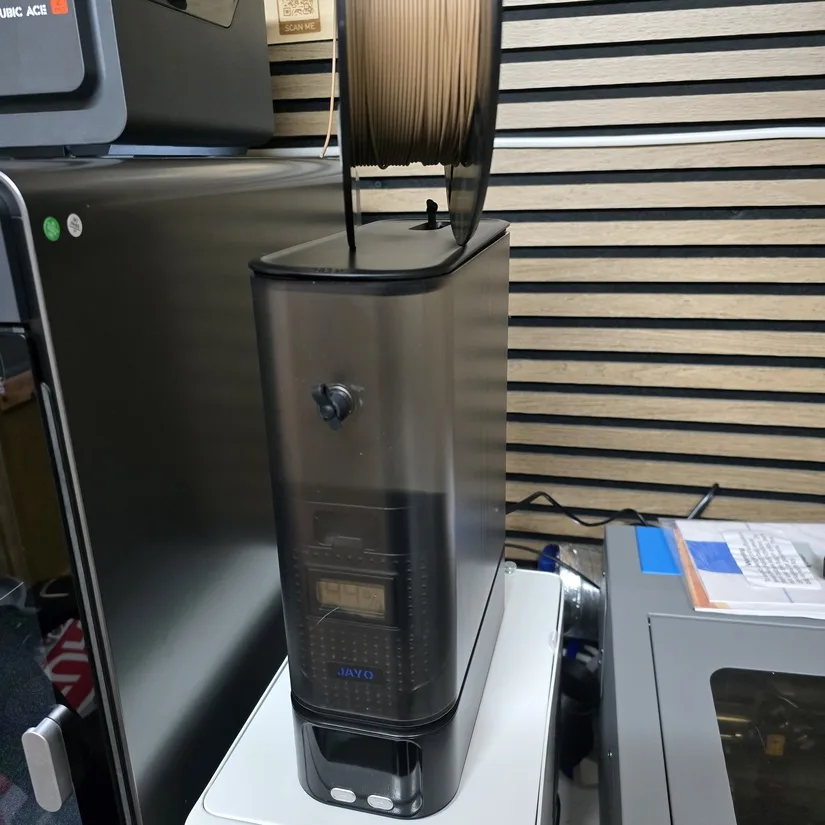
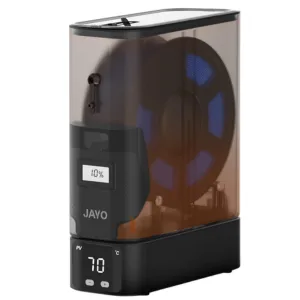
The Jayo J1 FilaDryer delivers an impressive balance of performance and affordability, coming from $59.99. For a dryer at this price point, it offers a surprisingly capable feature set. It handles all the usual suspects, including PLA, PETG, ABS/ASA, and TPU, and even takes on moisture-sensitive materials like PVA and nylon, which is where many budget dryers start to struggle. After testing the J1 in real-world printing conditions, it proved itself to be far more than a simple accessory. It heats evenly, maintains stable temperatures, and consistently improves filament quality. Prints that were previously plagued by stringing, brittleness, or inconsistent extrusion showed immediate improvement after a drying cycle.
©3DWithUs – Photo: Phil Macey
What makes the J1 especially appealing is how seamlessly it fits into different workflows. Print farms will appreciate its reliability and low operating cost, while hobbyists will find it to be one of those tools that quietly saves time, money, and frustration. At this price, it does not take long for the J1 to pay for itself in rescued filament and more successful prints.
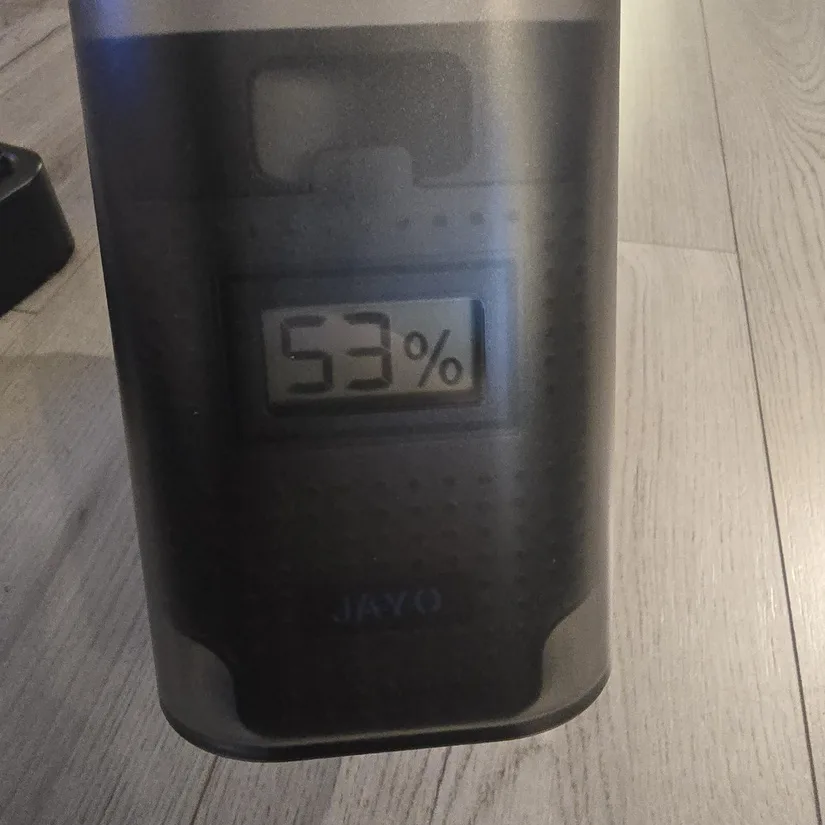
The built-in storage function is a thoughtful bonus, allowing you to keep filament protected between sessions. Meanwhile, the front-mounted hygrometer gives you a quick visual read on humidity levels, making it easy to know when your filament is ready to go.
Where to Buy
Price: $59.99-$64.99
Compare the Prices & Bundles:
Amazon | Official Store
Jayo FilaDryer J1 Specifications
| Net Weight | 1.64 kg |
|---|---|
| Standby Power | < 0.5 W |
| Max Operating Power | 150 W |
| Max Operating Current | 2.5 A |
| Temperature Range | 35°C – 70°C |
| Time Setting Range | 0 – 99 h |
| Product Dimensions (L × W × H) | 306 × 249 × 99 mm |
| Internal Dimensions (L × W × H) | 236 × 226 × 91 mm |
| Max Spool Size | 200 × 67 mm (1 kg × 1) |
| Compatible Filament Diameter | 1.75 mm / 2.85 mm |
| Humidity Display Range | 10% – 90% |
What’s in the Box
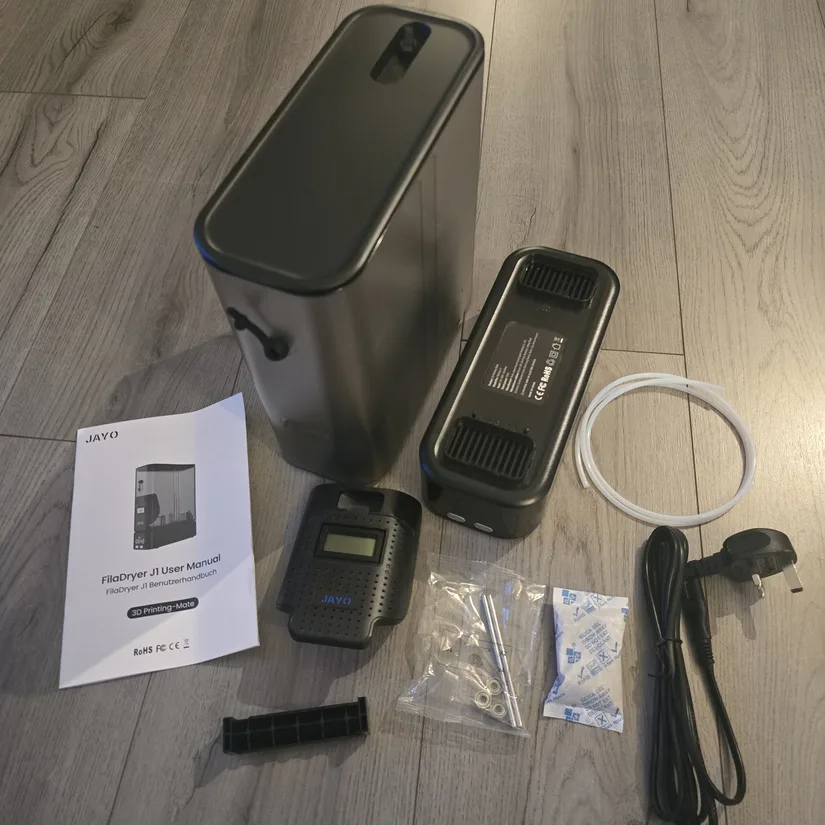
J1 FilaDryer Set: The standard package includes the drying chamber, heating base, desiccant pack, desiccant container, bottom rollers, bottom bearings, filament holder, sealing footpads, a 1 m PTFE tube, user manual, and power cable.
©3DWithUs – Photo: Phil Macey
J1 FilaDryer Bundle Set: The bundle version includes the drying chamber, desiccant pack, desiccant container, bottom rollers, bottom bearings, filament holder, sealing footpads, PTFE tube, and user manual.
Initial Overview
One of the standout aspects of the Jayo J1 FilaDryer is its thoughtful, modular design. Each drying chamber is fully stackable, allowing users to expand their setup as their filament collection grows. Whether you are running a print farm or simply juggling multiple materials at home, the ability to build upward instead of outward keeps your workspace clean and efficient.
Despite its compact footprint, the J1 supports a wide range of spool sizes, from lightweight 0.25 kg spools to standard 0.5 kg and 1.1 kg rolls, including paper-core spools. A cross-axis support system keeps the spool stable, while the integrated hygrometer provides a quick visual check of humidity inside the chamber.
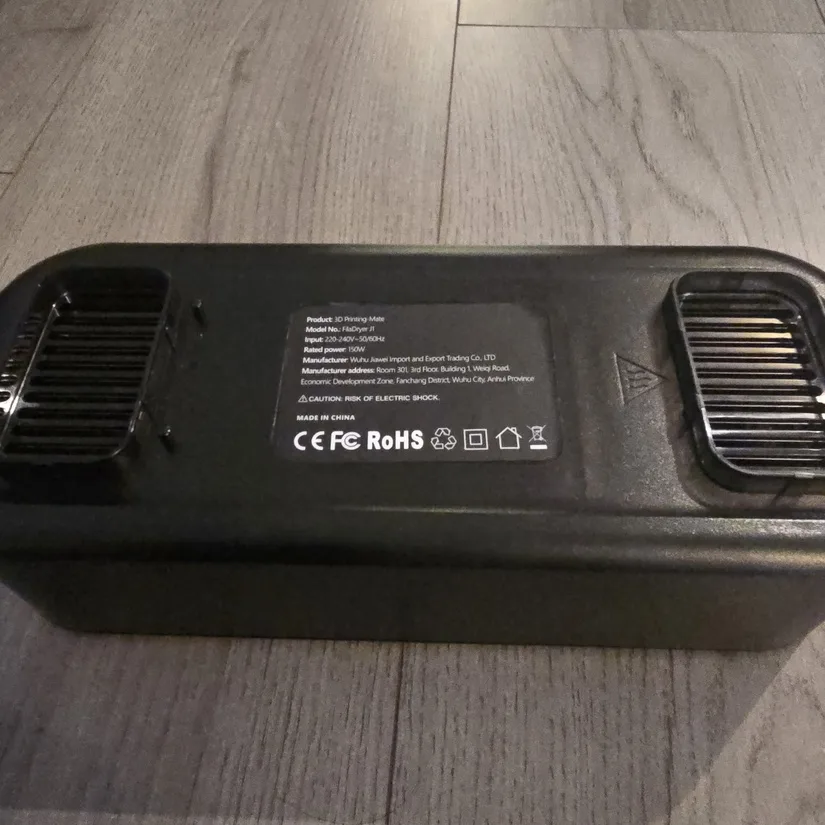
Drying performance is handled by a 150 W PTC heating system that can reach up to 70°C, targeting consistent heat delivery for a broad range of filaments. An internal hygrometer helps you track humidity during a drying cycle, and the storage mode is designed to keep filament protected between prints.
Setup Process
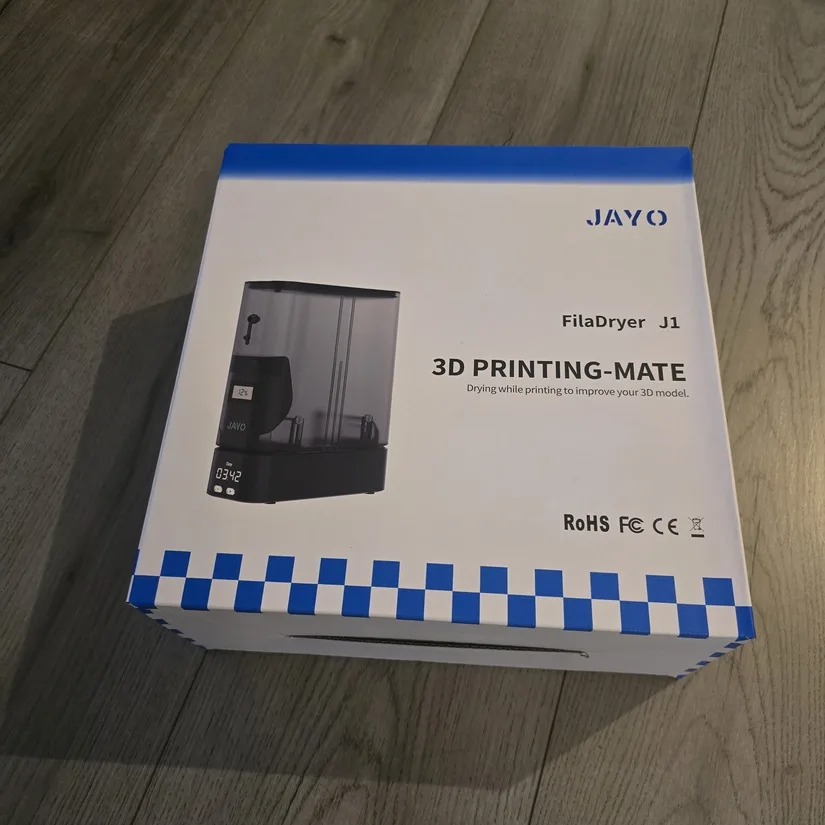
The Jayo J1 FilaDryer arrives with everything you need to get started. Inside the box, you will find the main drying unit, a storage chamber, a combined hygrometer and desiccant module, and a small set of parts for the spool rollers.
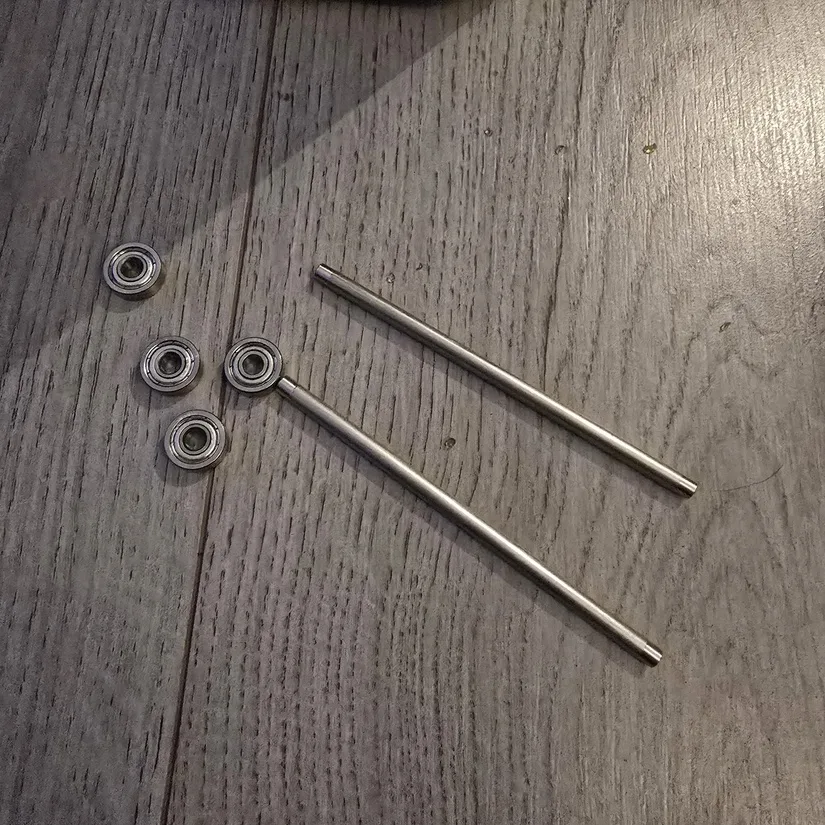
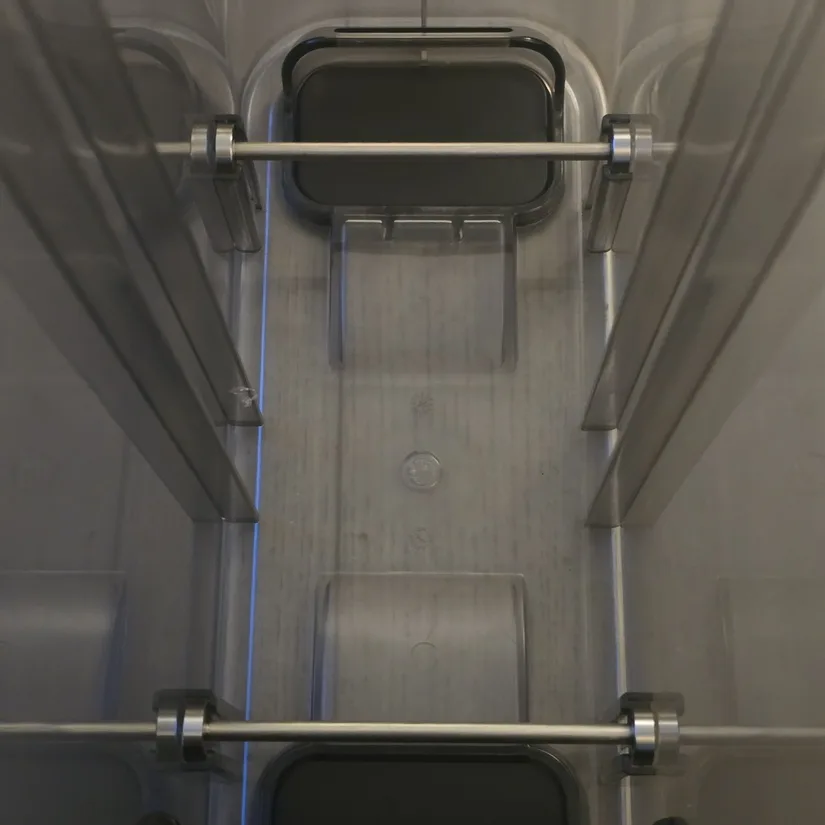
Begin by assembling the two bottom rollers and their bearings. Slide a bearing onto each end of the rollers, then seat the rollers into the lower section of the storage unit.
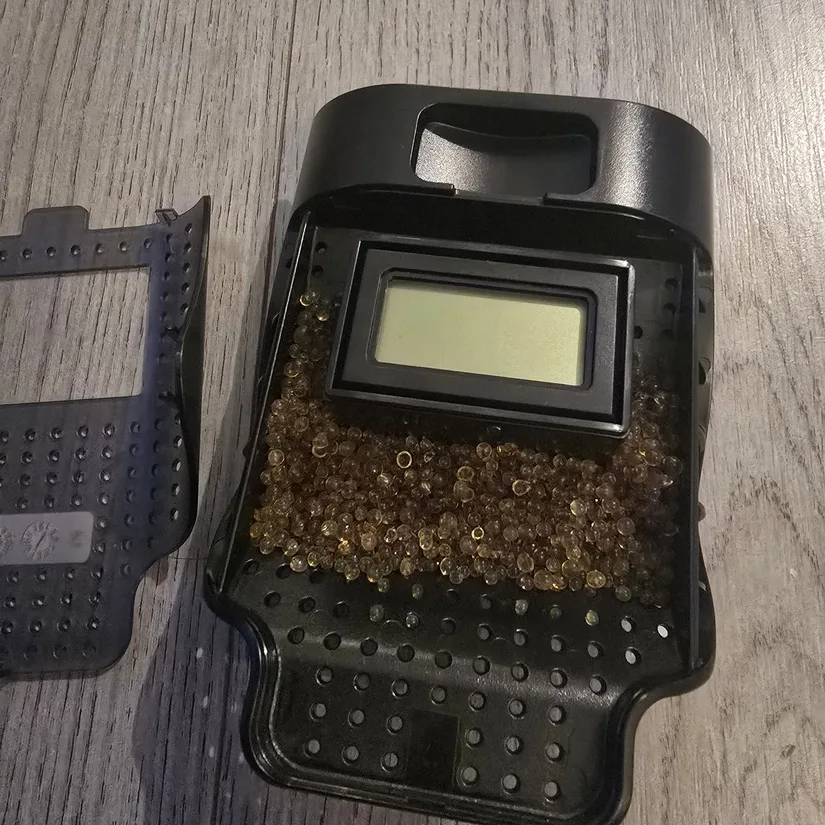
Next, insert the hygrometer module into the front of the storage box (the section with the clear display window). It slides into place and also houses the desiccant container.
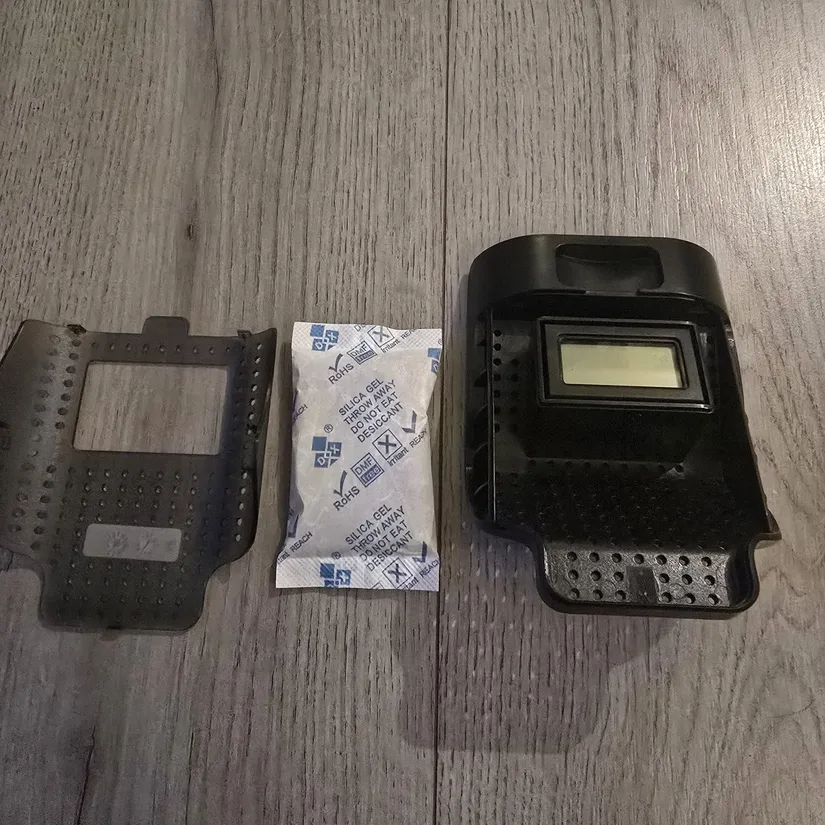
Place the desiccant pack into its container. The included desiccant changes colour as it absorbs moisture, which makes it easy to see when it has been working and when it may need recharging or replacement.
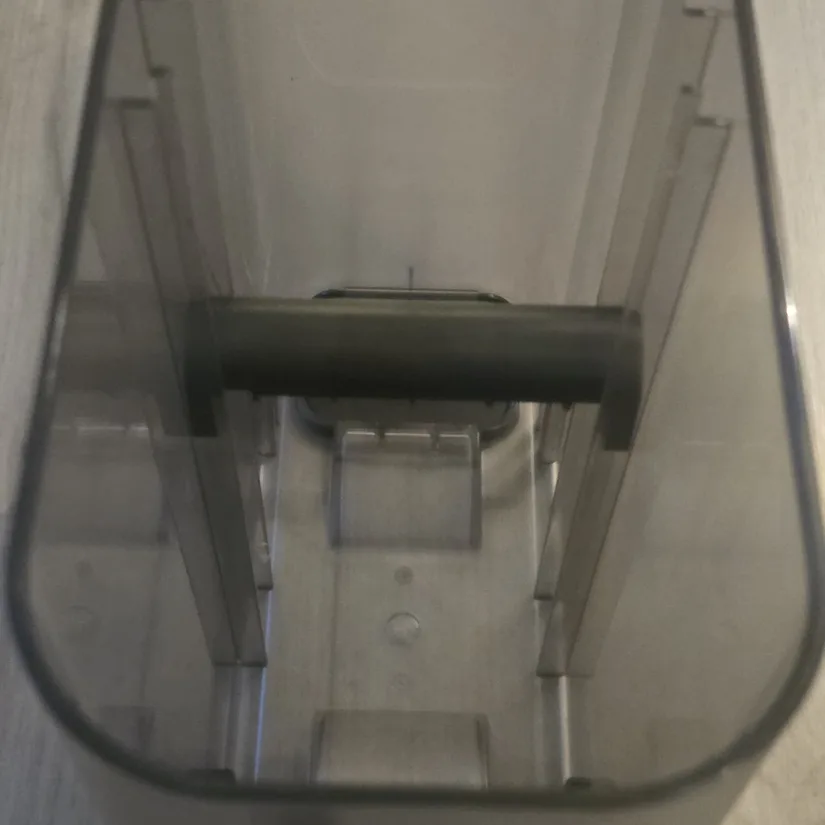
Finally, install the filament holder into the centre section of the unit so the spool is supported correctly during drying and printing.
Once assembled, the dryer can be used as a standalone drying station or as a feed-through dryer while printing. The heating base houses the controls for temperature and timer settings.
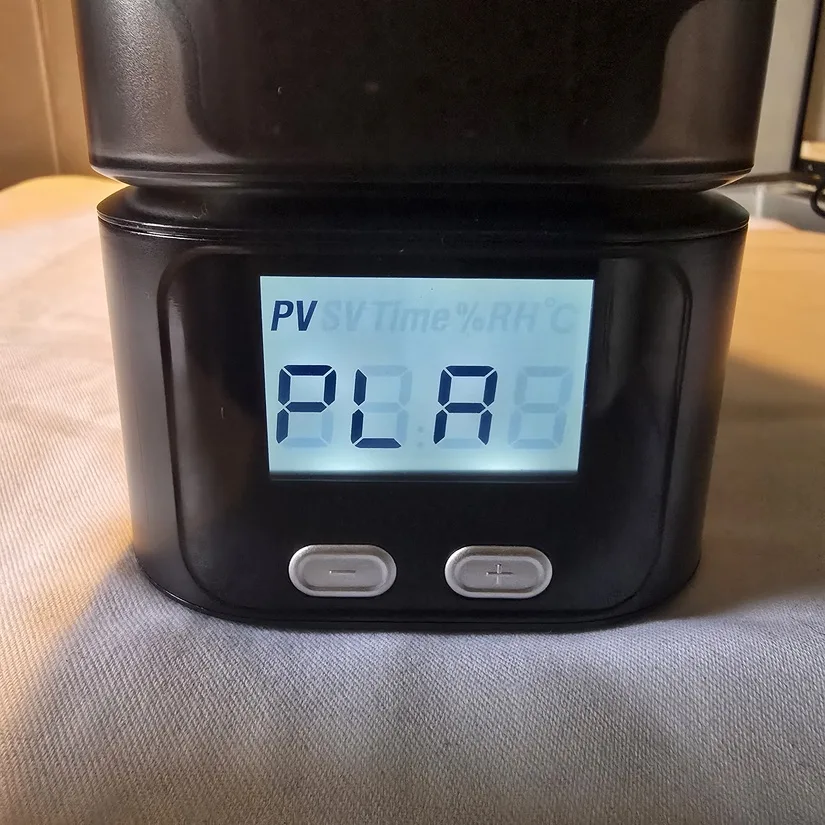
In everyday use, the controls are simple and responsive, making it easy to dial in the right drying settings without overthinking the process. It is a straightforward system that does exactly what it is designed to do.
Stackable Storage Capabilities
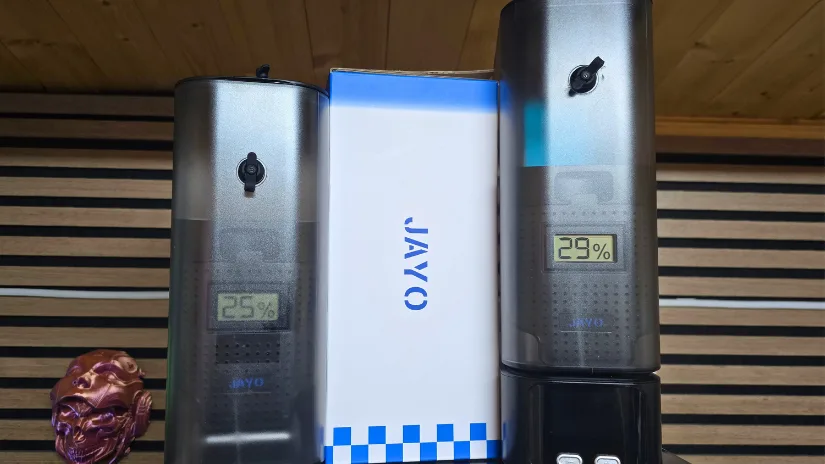
One of the most useful aspects of the Jayo J1 FilaDryer is its stackable storage design. Each unit is shaped to sit neatly on top of another, allowing you to expand capacity without taking up extra bench space. Jayo recommends stacking up to three units high, which is ideal for anyone managing multiple filament types or running several printers at once.
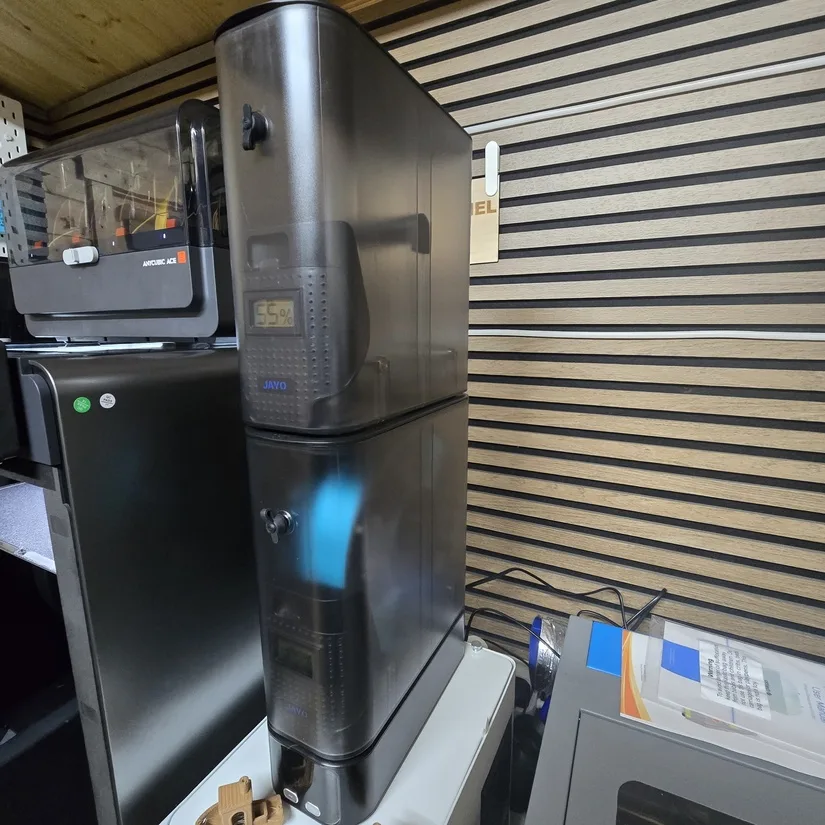
Even when stacked, the front-mounted hygrometers remain visible, making it easy to check humidity across chambers at a glance. One downside is that there is no physical latch between units, so you will want to keep the stack on a stable surface.
Safety and Thermal Cutoff
The Jayo J1 includes thermal protection designed to reduce risk during longer drying sessions. The unit incorporates a hardware-level thermal cutoff intended to shut down heating if temperatures exceed safe operating limits, acting independently of the software control system.
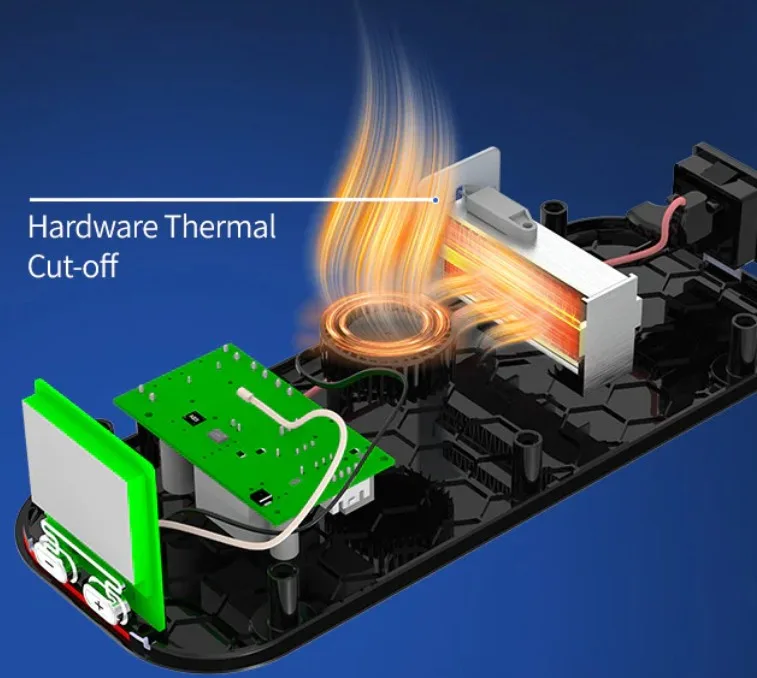
Image: JAYO
Removable Bottom Covers
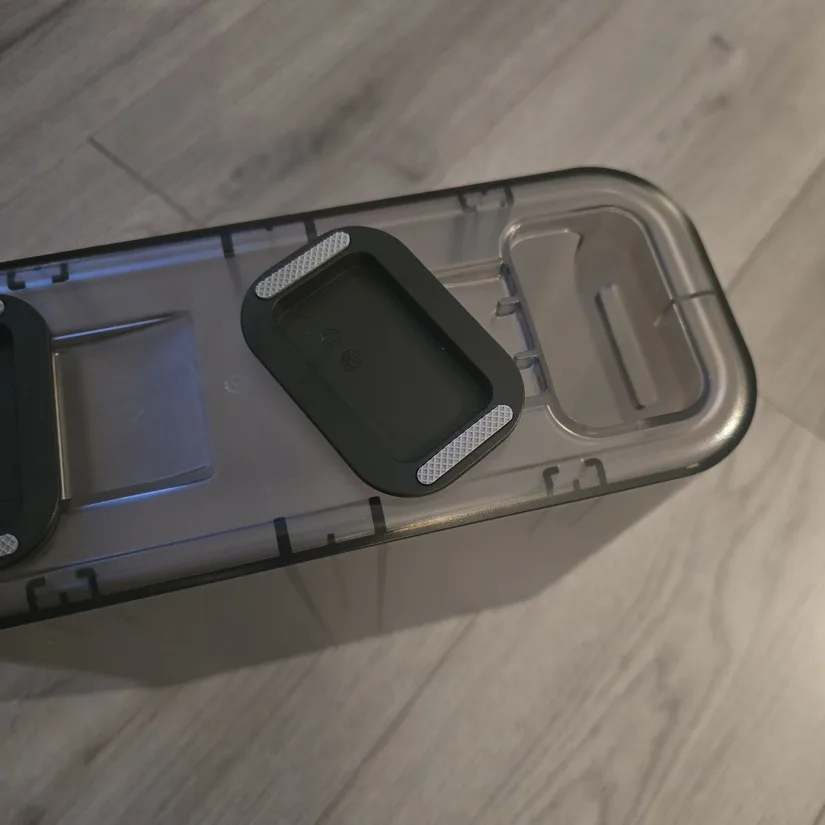
The J1 uses removable bottom covers for drying and storage modes, each with a rubber seal to help maintain an airtight closure. It is a simple design choice, but it supports the main goal: keeping filament dry during storage, not just during a heated cycle.
Testing (Wood PLA Benchy)
Wood-based PLA blends are extremely prone to absorbing moisture, far more than standard PLA. When they take on water, steam pockets form during extrusion, causing bubbling, stringing, and rough surface texture. Proper drying is the quickest way to bring print quality back under control.
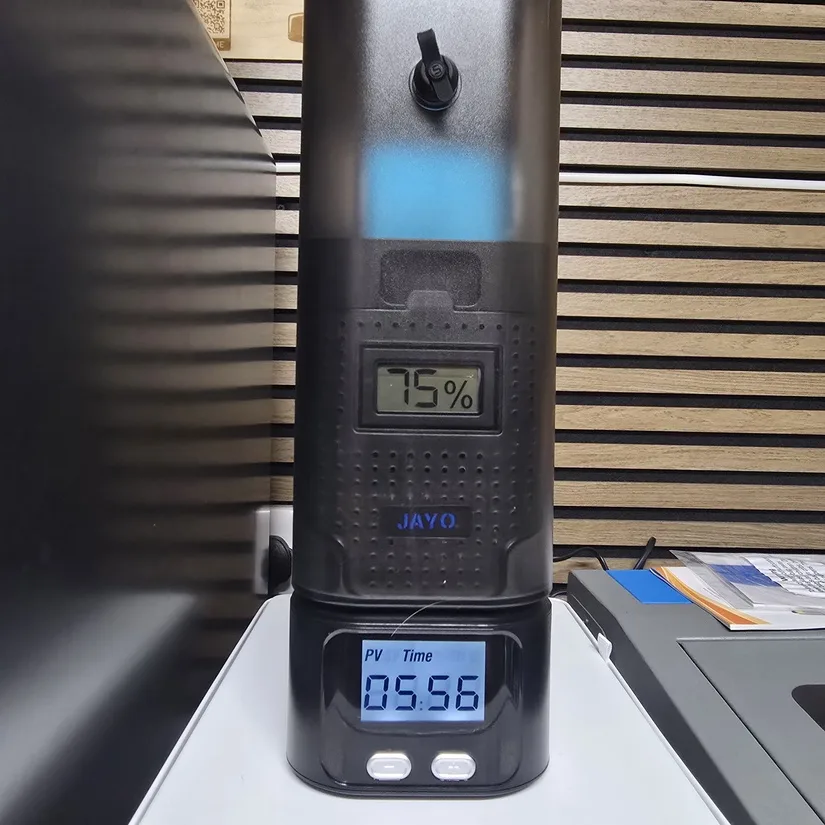
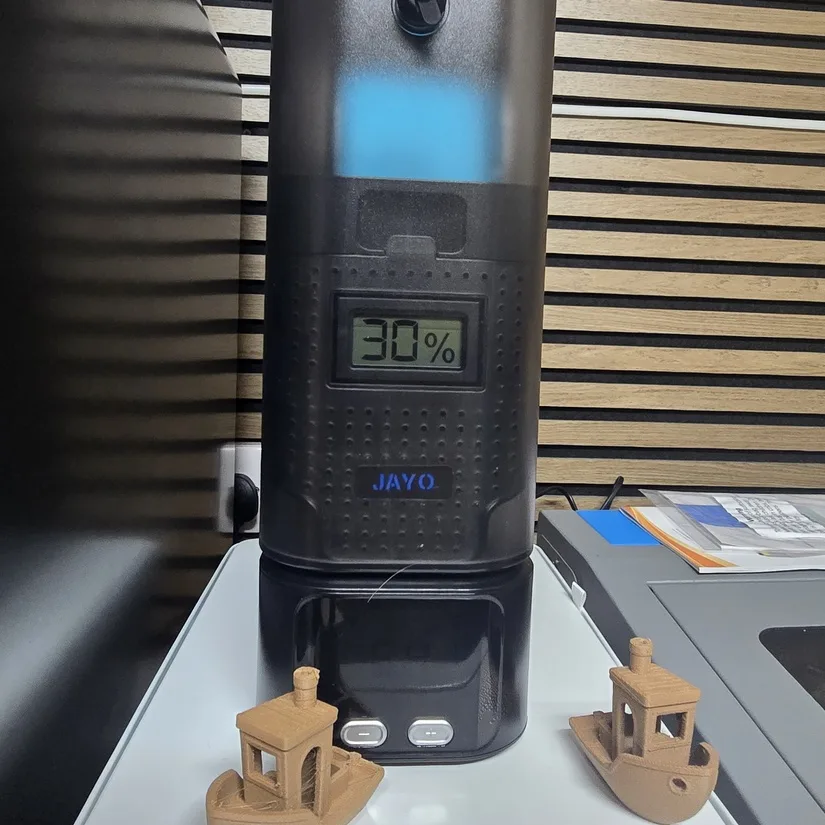
To demonstrate the impact, I printed two identical Benchies using the same gcode. The first print was done straight from the spool without drying. The second was printed after drying the filament for six hours in the Jayo J1, then storing it in the sealed chamber to reduce reabsorption.
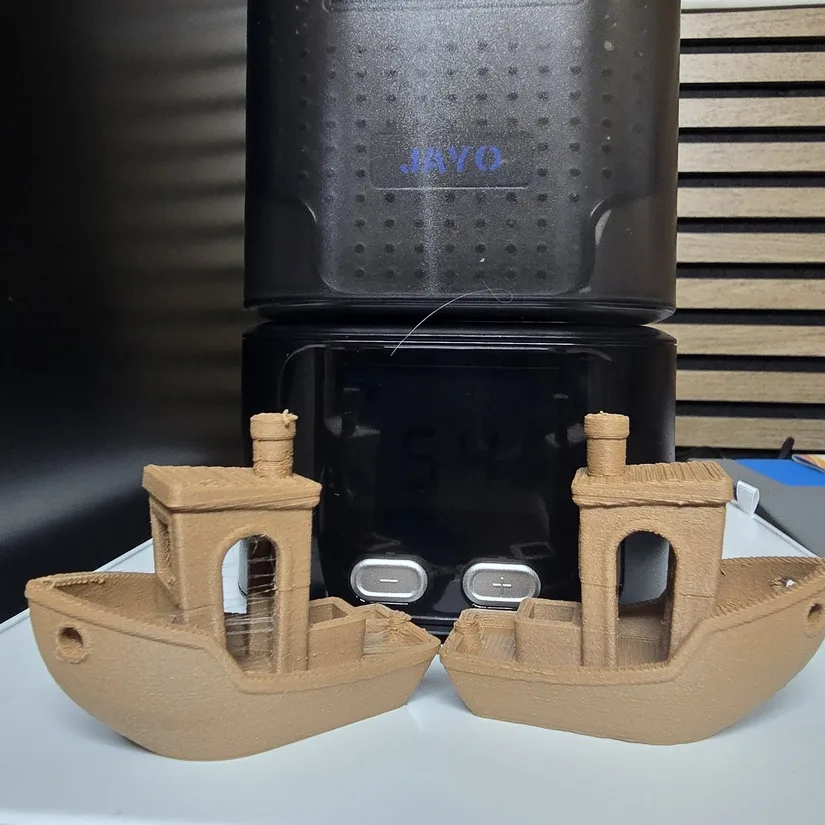
©3DWithUs – Print and Photo: Phil Macey
Following the six-hour drying cycle, the humidity reading dropped significantly, and the print quality improved with fewer visible artefacts, smoother surfaces, and more consistent extrusion.
Video: JAYO FilaDryer J1 in Action
Alongside this written hands-on review, I also recorded a detailed video showing the JAYO FilaDryer J1 setup, drying process, and real-world testing with filament prints. The video gives a closer look at the unit’s design, controls, and how it performs during everyday use.
Other Filament Dryers
On 3DWithUs, we have a detailed filament dryer comparison guide where products from brands such as EIBOS, Creality, Polymaker, Sovol, and others are listed for price and feature comparisons.
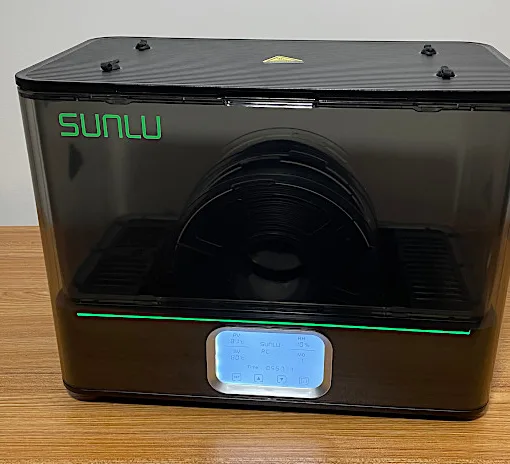
Other filament dryers, such as the SUNLU S1, are built around higher capacity, supporting dual spools or larger 3 kg rolls. In contrast, the Jayo J1 adopts a slimmer, single-spool design with stackable expansion, making it better suited to compact workspaces where footprint matters more than volume.
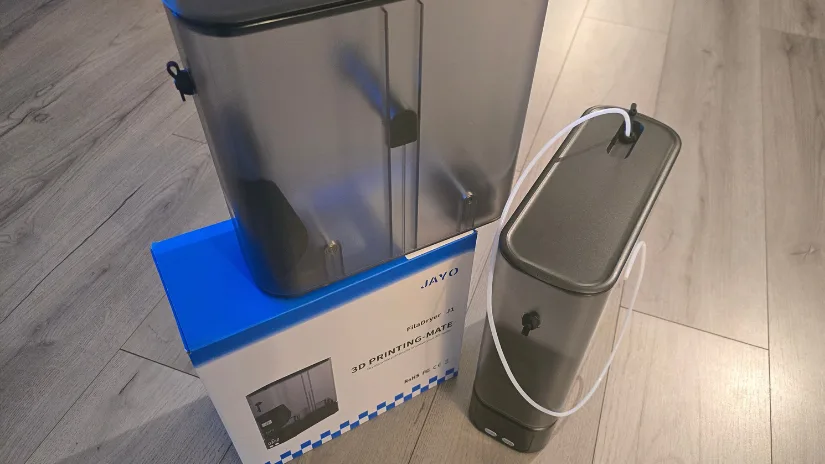
The Jayo J1 would pair well with the wide range of FDM 3D printers we’ve thoroughly tested over the years, particularly in budget and mid-range categories where filament consistency makes a noticeable difference.
Have questions? Feel free to ask in the comment section below.
For a wider discussion or to share your own JAYO J1 experience, join us in the forum:
Conclusion and Pros & Cons
Compare the Prices & Bundles:
Official Store
JAYO J1 Review
Review Summary
The Jayo J1 FilaDryer is a practical and effective solution for makers who want consistent filament performance without spending a fortune. It is compact, straightforward to set up, and the stackable design makes it easy to expand drying and storage capacity without consuming additional workspace. Add in the integrated humidity display and thermal protection, and the J1 offers strong value for everyday printing.
Pros:
Fast drying plus storage functionality, stackable design, inexpensive for the feature set, simple controls, integrated humidity display.
Cons:
Single-spool capacity, no latch to secure stacked units.