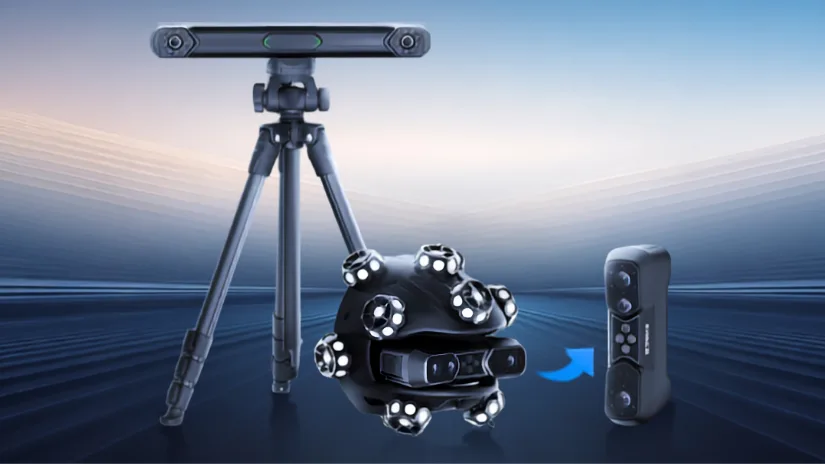
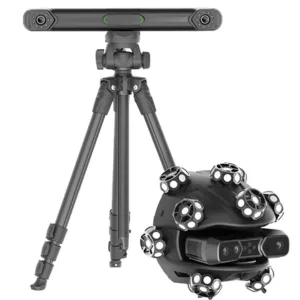
The latest addition to SHINING 3D’s professional scanner lineup is the EinScan Trak, a wireless dual-form 3D scanning system that combines optical tracking with a detachable handheld scanner. Designed for medium-to-large objects as well as localized high-detail capture, it supports marker-free tracking, three blue-laser scanning modes, and flexible switching between tracking and handheld workflows within the same project group.
SHINING 3D brings over 20 years of experience in metrological 3D scanning to its EinScan and EINSTAR scanner ranges. With EINSTAR scanners, SHINING 3D is transferring this technological foundation directly into the entry-level and prosumer market. Although positioned as more accessible solutions, these devices directly benefit from the software, algorithms, and development work of the professional segment.
Table of Contents (Jump to a Section)
EinScan Trak NEW
Where to Buy
Price: $6,999
Compare the Prices & Bundles:
Official Store
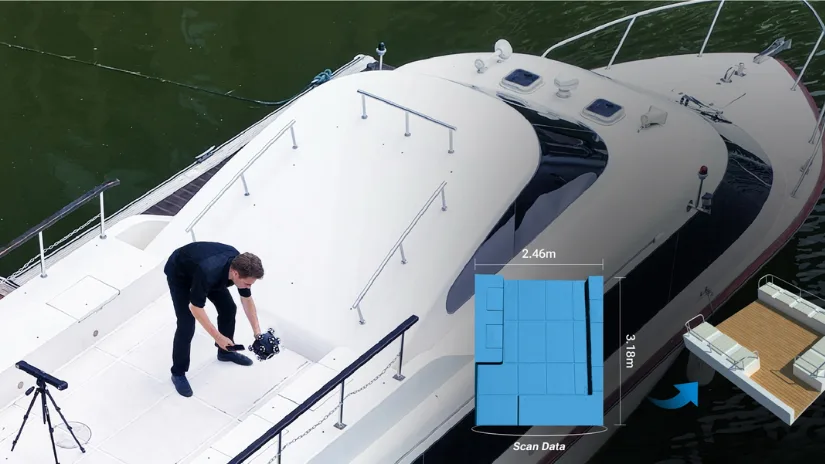
The EinScan Trak is designed as a flexible professional 3D scanning system that combines optical tracking with a detachable handheld scanner. In tracking mode, the scanner works wirelessly with the tracker to capture medium-to-large objects without placing markers directly on the object, making it particularly useful for automotive, boat, engineering, and other large-scale scanning tasks.
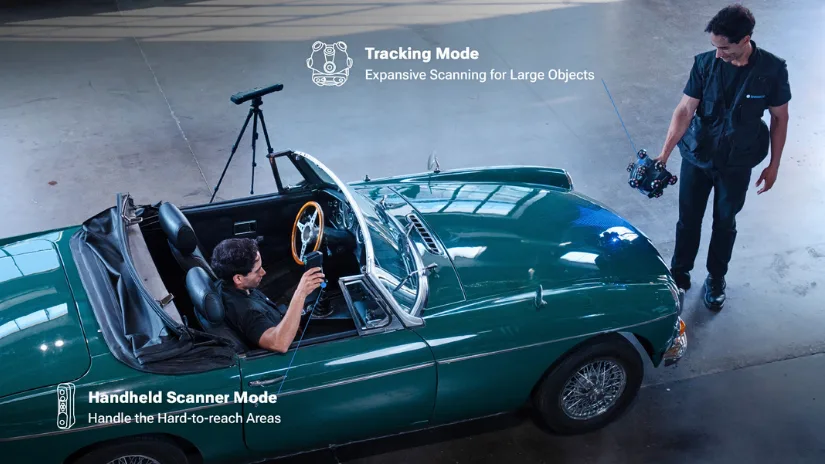
For smaller components, detailed areas, deep cavities, or hard-to-reach geometry, the scanner can be detached and used independently in handheld mode. Both tracking and handheld scans can be combined within the same project group, allowing users to move from broad surface capture to localized high-detail scanning without switching to a completely different system.
EinScan Trak Key Features & Specifications
Rather than reproducing the full specification table, below are some of the most important figures that define the EinScan Trak. Full technical specifications can be found on the official product page.
- Two working modes: Tracking Mode and Handheld Scanner Mode
- Blue laser modes: 19 + 19 crossed laser lines, 7 parallel laser lines, and a single laser line
- Volumetric accuracy: up to 0.1 mm
- Resolution: 0.05–10 mm
- Scanning speed: up to 2,630,000 points/s
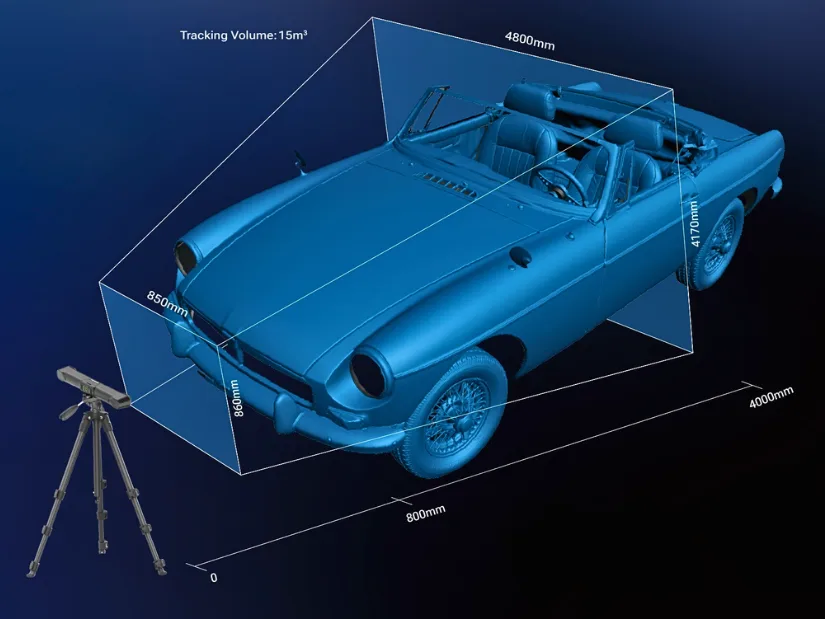
- Tracking distance: 800–4,000 mm
- Maximum tracking FOV: 4,796 × 4,174 mm at 4,000 mm
- Tracking volume: up to 15 m³
- Color capture: 5MP texture camera
- Output formats: STL, OBJ, PLY, 3MF, and ASC
- Battery life: up to 5.5 hours in tracking mode and 3.5 hours in handheld scanner mode
The main advantage of EinScan Trak is how these capabilities are combined into one workflow. Users can start with fast, wide-area tracking for a large object, detach the scanner when more freedom is needed, and then capture smaller details or difficult geometry without starting a separate project group.
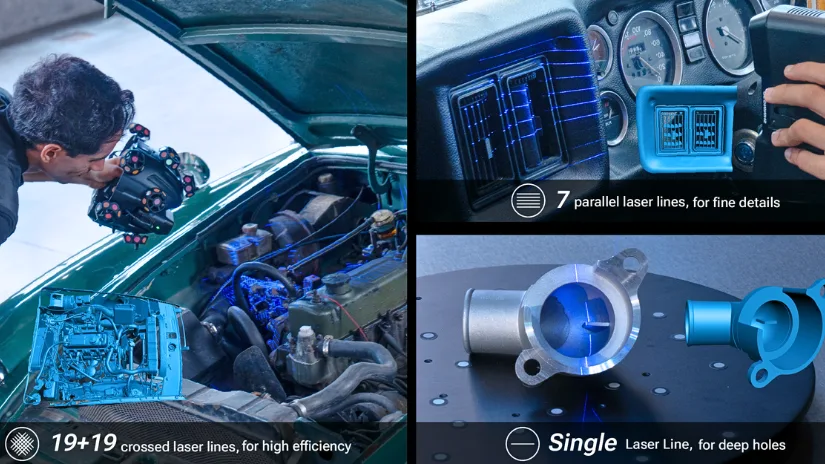
Together, these three laser modes give the EinScan Trak flexibility to move from fast large-area capture to fine-detail scanning and difficult recessed geometry within the same system.
Marker-Free Tracking for Large Objects
One of the key advantages of the EinScan Trak is its marker-free workflow for medium-to-large objects. In tracking mode, the optical tracker follows the position of the spherical scanner using the scanner’s own retroreflective markers, so users do not need to place tracking markers across the surface of the object itself. This can significantly reduce preparation time when scanning vehicles, machinery, boats, sculptures, and other large objects.
The handheld scanner can also work without markers when the object has sufficiently rich and non-repetitive surface features, using feature-based tracking and alignment. For projects that require the highest level of detail or more controlled alignment, global markers remain available as an option. This gives the EinScan Trak flexibility to switch between faster marker-free capture and more traditional marker-assisted workflows depending on the object and scanning requirements.
5MP HD Texture Capture
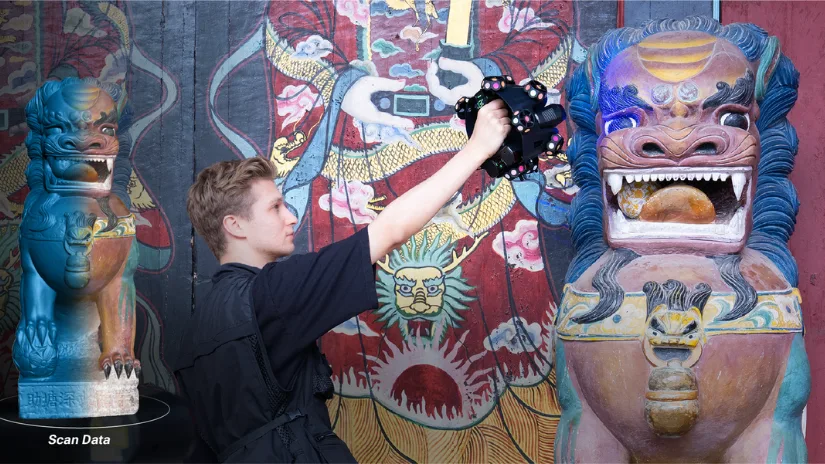
Alongside geometric data, the EinScan Trak can capture color using its integrated 5MP texture camera, helping preserve the visual appearance of scanned objects as well as their shape. This is particularly useful for cultural heritage, museum collections, artwork digitization, education, and digital archiving, where realistic surface color and texture can be just as important as dimensional detail.
Software for Measurement and Reverse Engineering
EinScan Trak is designed to continue beyond scanning into measurement and reverse-engineering workflows. It integrates with EXMeasure, SHINING 3D’s professional measurement software, which supports model alignment, geometric feature creation, color-map comparison, GD&T inspection, and dimensional measurements such as length, diameter, angle, area, and volume. A one-year EXMeasure license is included with the purchase of EinScan Trak. Download center.
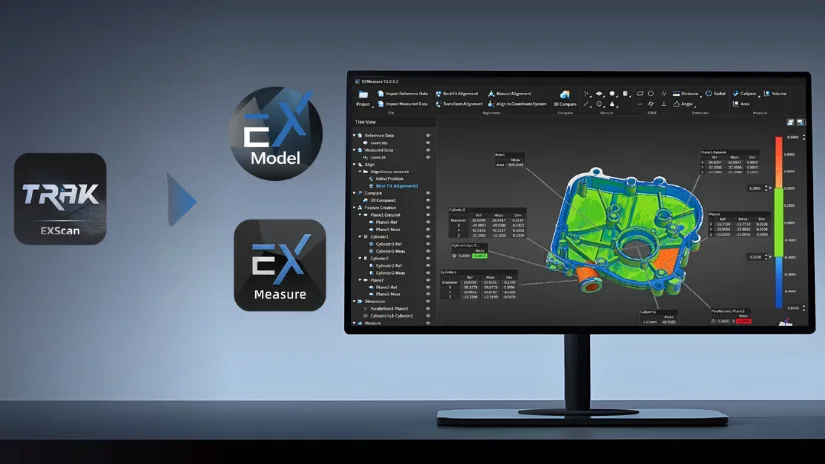
For reverse engineering, the system also works with the EXModel software series. EXModel provides tools for mesh editing, coordinate alignment, primitive extraction, cross sections, 2D and 3D sketching, free-form modeling, auto surfacing, and feature-based reconstruction. This helps users move from captured scan data toward editable, CAD-ready geometry for product redesign, engineering, and manufacturing workflows.
EinScan Rigil Lite
Where to Buy
Price: $3,199 – $3,899
Compare the Prices & Bundles:
Official Store | Amazon (EinScan Rigil)
Positioned as a more accessible entry into SHINING 3D’s standalone scanner range, the EinScan Rigil Lite brings together onboard processing, a touchscreen workflow, hybrid blue laser and IR scanning, and flexible PC connectivity. Based on the official product page, it is aimed at users who want the freedom of an all-in-one scanner while still keeping the option to connect wirelessly or by cable for more demanding projects.
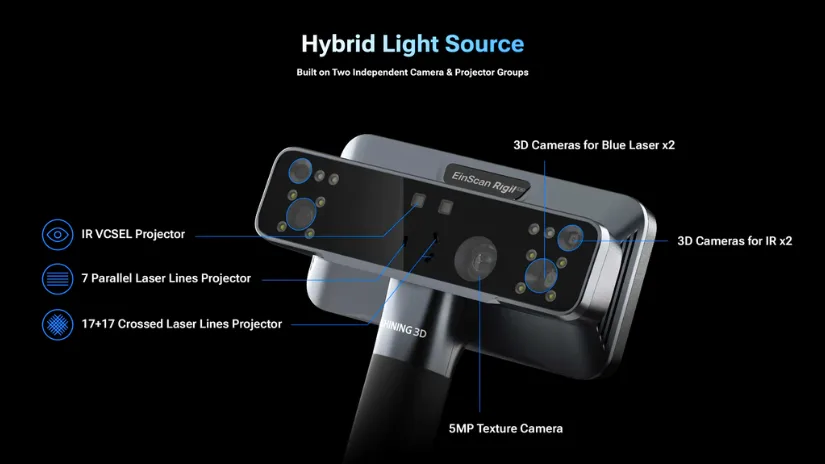
Image: SHINING 3D / EINSTAR
EinScan Rigil Lite Key Features & Specifications
- Tri-mode workflow: standalone scanning on the device itself, plus PC wireless and PC wired modes.
- Hybrid light source: 17+17 crossed blue laser lines, 7 parallel blue laser lines, and IR VCSEL.
- Two scan modes: Laser HD for finer detail and IR Rapid for faster wider-area capture.
- Scan speed: up to 2,940,000 points/s in crossed blue laser mode and up to 16,000,000 points/s in IR Rapid mode.
- Working distance: 170–550 mm in Laser HD mode and 160–1500 mm in IR Rapid mode.
- Resolution: 0.05–10 mm in Laser HD mode and 0.2–10 mm in IR Rapid mode.
- Colour capture: 5MP texture camera for full-colour scans.
- Hardware options: 24GB LPDDR5 + 512GB SSD or 32GB LPDDR5 + 1TB SSD.
- Output formats: STL, OBJ, PLY, 3MF, and ASC.
Find the full list of specifications on the Official Website.
EinScan Rigil Lite vs EinScan Rigil – Key Differences
The main difference is performance and hardware tier. The standard EinScan Rigil uses 25+25 crossed blue laser lines, while the Lite version uses 17+17 crossed blue laser lines. SHINING 3D also states that Rigil’s 25+25 laser setup is around 40% faster than Rigil Lite’s 17+17 configuration. In the listed specifications, Rigil reaches up to 4,800,000 points/s in crossed blue laser mode, compared to 2,940,000 points/s on Rigil Lite.
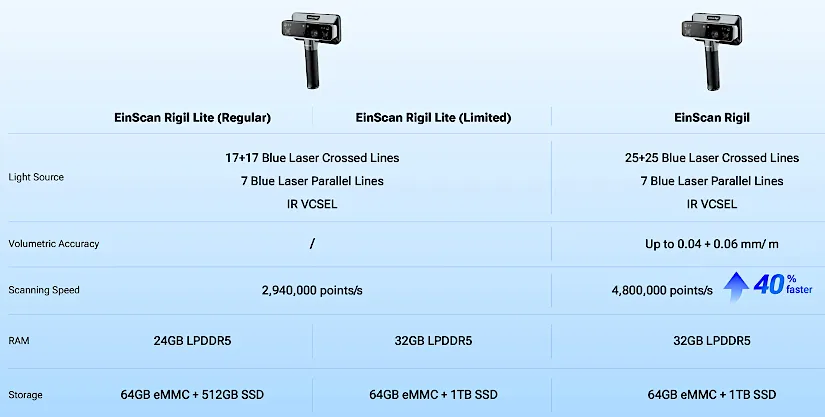
Rigil also has the stronger default hardware configuration, with 32GB LPDDR5 RAM and 1TB SSD storage, while Rigil Lite starts at 24GB LPDDR5 RAM and 512GB SSD. According to the official FAQ, Rigil also has the higher stated volumetric accuracy at up to 0.04 + 0.06 mm/m, while Rigil Lite is positioned slightly below it. In short, Rigil Lite looks like the more affordable entry into the standalone Rigil family, while the standard Rigil is the more capable option for users who want higher laser-line density, more speed, and a stronger hardware package.
EINSTAR Rockit – Pocket Size, Rocket Speed
Where to Buy
Price: $1,699 – $1,899
Compare the Prices & Bundles:
Official Store | Amazon
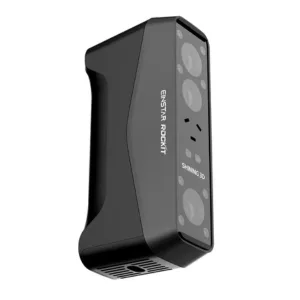
EINSTAR Rockit is a compact, wireless 3D scanner designed for users who want mobility without giving up scanning capability. The EINSTAR Rockit prioritizes speed, efficiency, and scan quality in time-sensitive environments. Its compact body integrates a laser and infrared hybrid light system that ensures rapid scanning and high-quality results across a wide range of applications, from intricate small parts to large-scale objects. With 38 cross laser lines optimized for fast, large-area capture and 7 parallel laser lines dedicated to fine feature acquisition, Rockit delivers strong productivity in time-sensitive automotive and production workflows.
One of Rockit’s defining features is its fully wireless workflow. With built-in Wi-Fi and a swappable battery, the scanner can operate cable-free for up to several hours, while still offering a wired fallback option if wireless interference occurs. This flexibility allows users to move freely around objects, scan larger parts, and work in tighter spaces without being constrained by cables or external hubs.

A key advantage is markerless laser scanning: objects with sufficiently structured surfaces can be scanned without preparation, eliminating the need to place and remove markers, significantly reducing time and lowering the entry barrier. The EINSTAR Rockit is consistently designed for efficiency, mobility, and a smooth workflow.
The scanner is supported by EXStar Hub software, which unifies scanning, alignment, and basic post-processing into a single interface. The software focuses on efficiency and stability, offering tools that simplify alignment, improve data quality, and streamline model preparation for downstream use such as 3D printing, reverse engineering, or digital visualization.
Key Highlights of EINSTAR Rockit
– Compact, pocket-sized wireless 3D scanner
– Hybrid light system with laser and IR scanning modes
– Built-in Wi-Fi and swappable battery for cable-free operation
– Marker-free scanning for faster setup
– Supports small to large objects, including outdoor scanning
– EXStar Hub software for streamlined scanning and processing
EINSTAR Rockit Hands-on Review
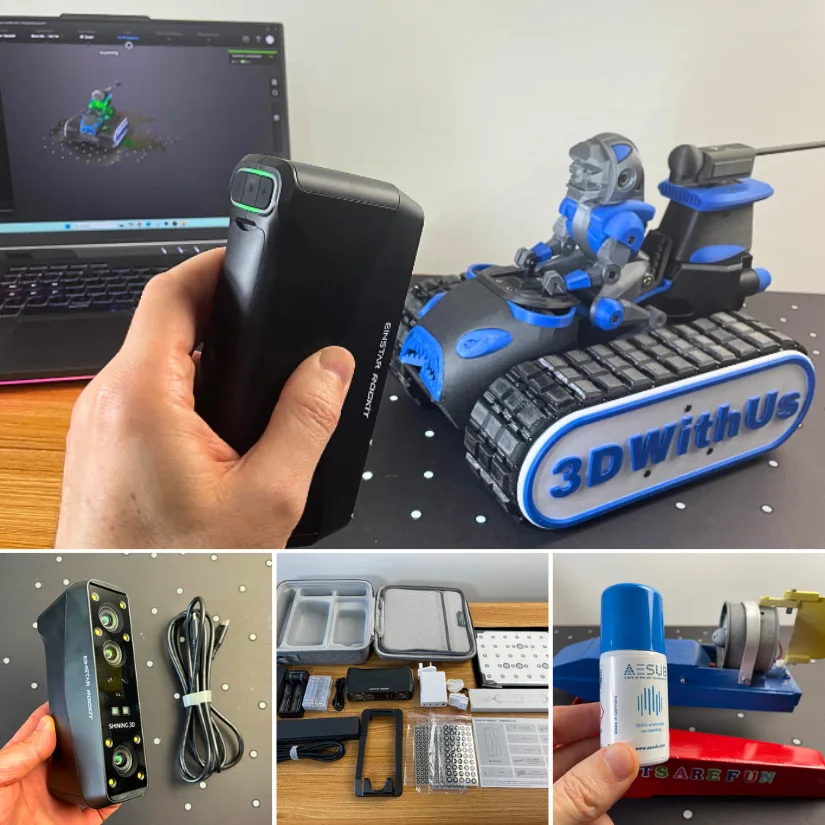
©3DWithUs – Scan and Photo: Max Funkner
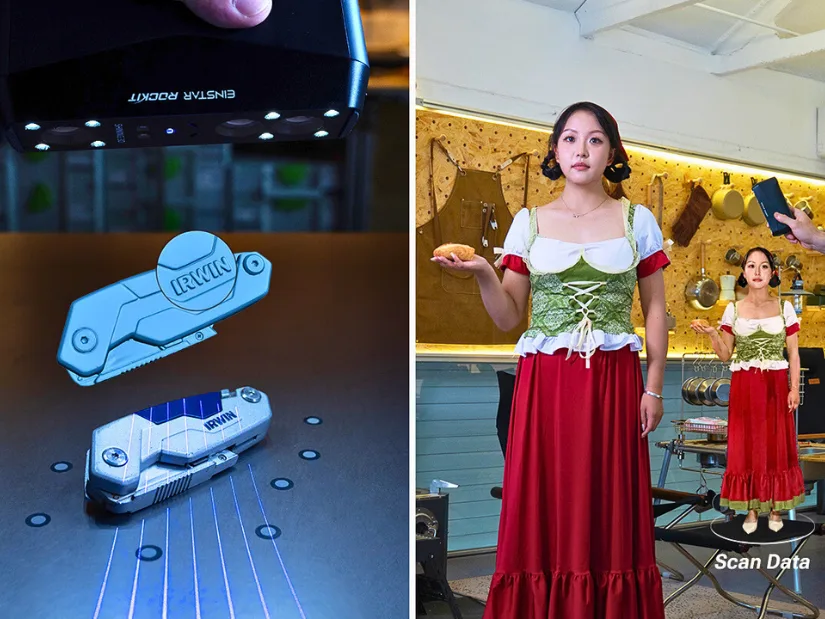
The EINSTAR Rockit is a new handheld 3D scanner from SHINING 3D that combines IR and Blue Laser scanning in one lightweight device. In my hands-on testing, I tried it on a range of objects, from a battle-hardened DeathRacer to a DIY RC boat, to see how it performs in real use across different surfaces, sizes, and levels of detail. So far, the Rockit has shown itself to be a flexible scanner for makers, creators, and prosumers who want both fast texture capture and cleaner mesh detail in one workflow. Setup was quick, EXStar Hub guided the process well, and the scanner felt comfortable in the hand during longer sessions. You can read the full hands-on review by Max Funkner here: EINSTAR Rockit 3D Scanner Review.
Even Better EINSTAR
Where to Buy
Price: $1,049 – $1,249
Compare the Prices & Bundles:
Official Store | Amazon
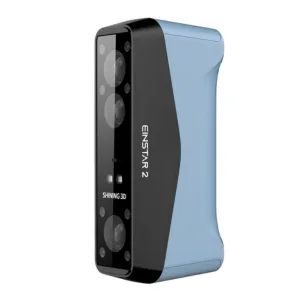
The EINSTAR 2 3D scanner addresses one of the original EINSTAR’s key limitations by significantly improving detail capture on small objects while expanding freedom of movement through a true wireless design. Its hybrid light system, combining blue laser technology with infrared VCSEL, ensures stable tracking across a wide range of object sizes and materials, providing operators with high flexibility in both indoor and outdoor working environments. So it’s ideal for automotive components, reverse engineering, and a variety of creative applications.
Key upgrades of EINSTAR 2:
1. Newly added 17 parallel blue laser lines
2. Wireless operation
The EINSTAR 2 features wireless operation, a swappable battery, and full-color capture. It’s designed for users who want studio-level scanning results without being tied to a fixed setup.
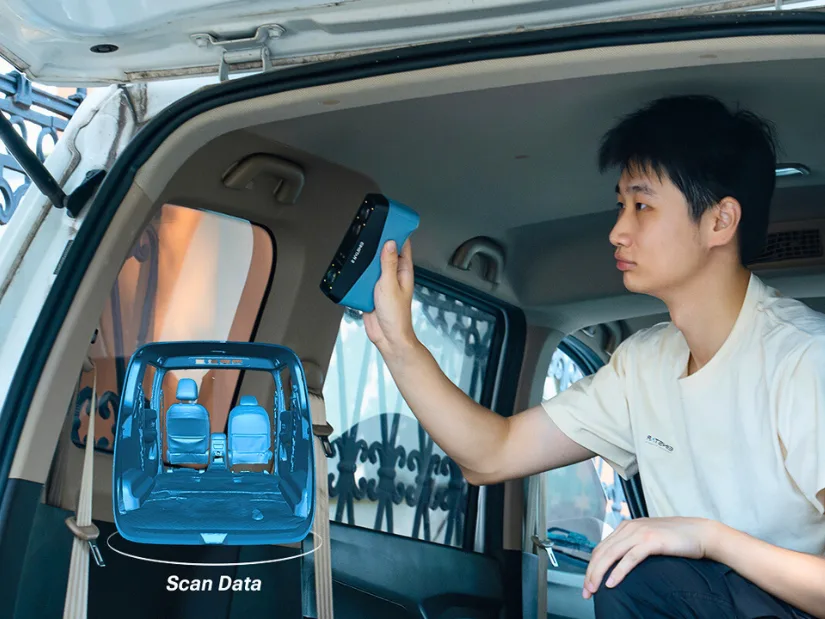
A major step forward is its true wireless workflow. EINSTAR 2 features built-in Wi-Fi and a swappable battery that supports extended scanning sessions without cables or external hubs. This makes it easier to move around larger objects, scan in confined spaces, or work outside the studio. A wired connection remains available when needed, providing flexibility in environments with wireless interference.
The scanner uses a hybrid light source that combines blue laser and IR VCSEL modes. The laser mode is optimized for fine details, reflective surfaces, and small objects, while the IR mode supports faster capture of larger objects and performs well in darker or outdoor environments. This versatility allows EINSTAR 2 to adapt to a wide range of materials and lighting conditions, including scanning black or reflective parts without spray.
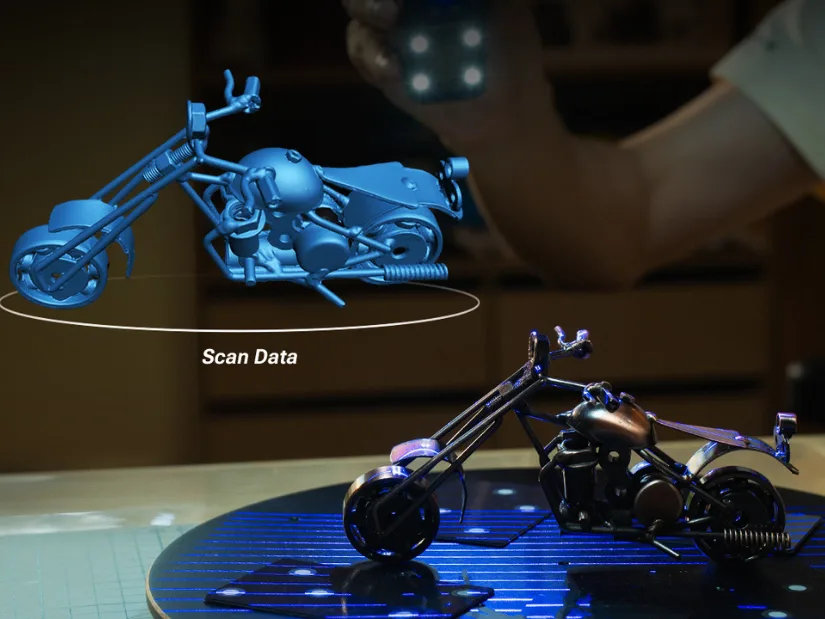
Like Rockit, EINSTAR 2 is supported by EXStar Hub software, which unifies scanning, alignment, and basic processing in a single interface. The software focuses on stability and efficiency, offering tools for alignment, data quality control, and model optimization. This makes EINSTAR 2 suitable not only for capture, but also for preparing scan data for 3D printing, reverse engineering, and digital content workflows.
Key Highlights of EINSTAR 2
– Compact, lightweight handheld 3D scanner
– True wireless operation with swappable battery
– Hybrid light system with laser and IR scanning modes
– Handles small parts, large objects, and interior spaces
– Works on black and reflective surfaces without spray
– Suitable for indoor and outdoor scanning
– EXStar Hub software for streamlined scanning and processing
Rockit vs EINSTAR 2 – A Brief Comparison
EINSTAR Rockit and EINSTAR 2 are closely related scanners that share the same core design philosophy and scanning approach. Both are compact, handheld, fully wireless 3D scanners built around a hybrid light system, and both rely on the same EXStar Hub software for scanning and basic processing. In practical use, the overall workflow and scanning experience are very similar, making either option suitable for makers, creators, and prosumers looking for flexible, cable-free 3D scanning.
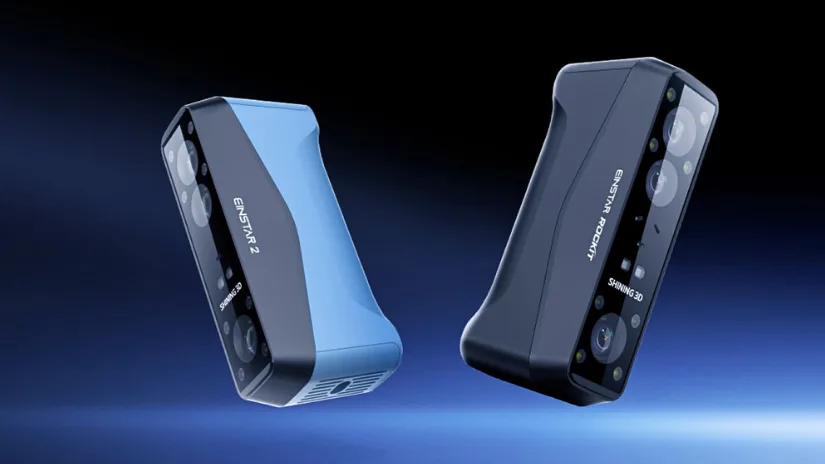
EINSTAR 2 is equipped with 17 parallel blue laser lines and offers a high scanning speed of up to 90 fps, while its IR VCSEL projector enables efficient capture of large objects.
EINSTAR Rockit combines 38 crossed laser lines plus infrared for fast, large-area scanning, along with 7 parallel laser lines for capturing fine details.
Differentiation from the EINSTAR 2 is deliberately handled through price and application scope, allowing users to choose the right solution based on budget and use case.
Quick comparison overview
– Shared DNA: handheld, wireless, hybrid light 3D scanners
– Workflow: similar scanning experience and EXStar Hub software
– Target users: makers, creators, prosumers.
– Applications:aftermarket & reverse engineering、AR/VR digital content、3D printing & personal manufacturing、heritage preservation & art
– Price: EINSTAR Rockit $1,699 vs EINSTAR 2 $1,049
EINSTAR VEGA
Where to Buy
Price: $1,599 – $1,999
Compare the Prices & Bundles:
Amazon | Official Website
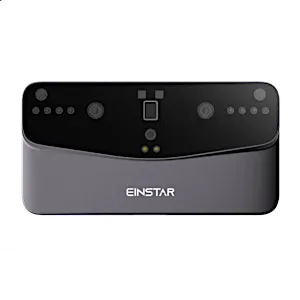
The EINSTAR VEGA is a standalone 3D scanner that combines everything you require to scan, edit, and process models into a single unit. It provides two capture modes – HD and Fast – employing a blend of infrared MEMS for HD capturing and infrared VCSEL for capture mode Fast.
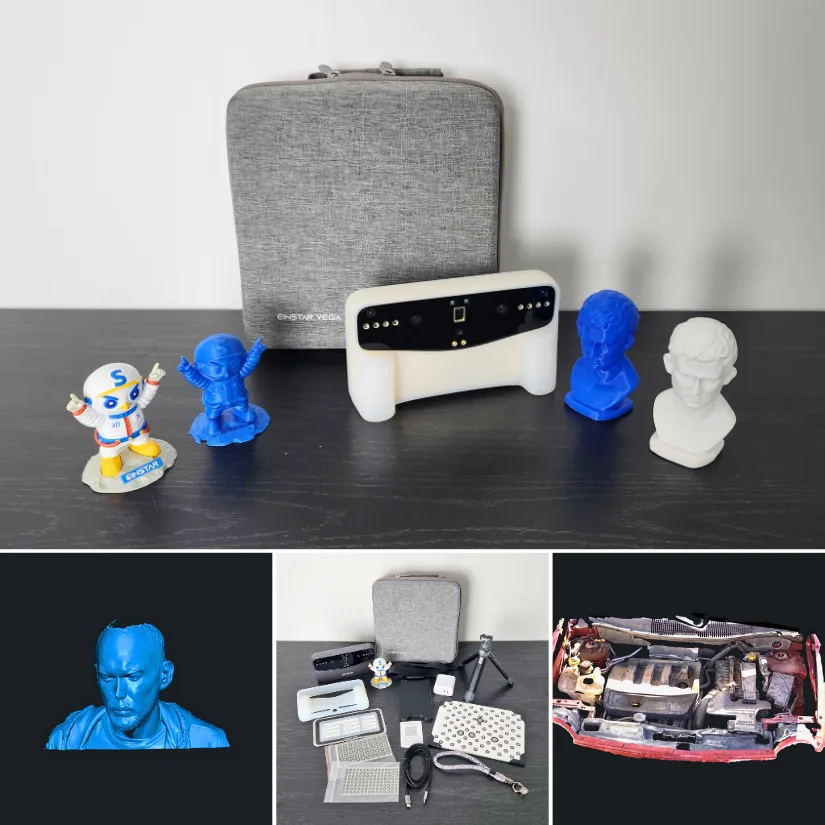
©3DWithUs – Photo and Scans: Will Zoobkoff
The EINSTAR VEGA is a strong performer in the portable 3D scanning category. Whether you’re capturing small figures, scanning body parts for prosthetics or cosplay, or digitizing vehicles, it delivers consistent, high-quality results.
Read more:
EINSTAR VEGA Review by Will Zoobkoff.
About EINSTAR and Shining3D
With over 20 years of experience in metrology-grade 3D scanning, SHINING 3D focuses on high-precision 3D measurement and full-size inspection solutions. Its systems deliver accuracy from 5 to 50 microns and are used in demanding industrial and medical fields, including civil aviation, automotive, machinery, energy, electronics, and dentistry. This long-term focus on research and real-world applications has established SHINING 3D as a global provider of high-precision 3D scanning technologies.

SHINING 3D also works to make advanced 3D scanning accessible to prosumers and creators. This goal drives the development of the EINSTAR lineup, including EINSTAR Rockit, EINSTAR Vega and EINSTAR 2. These scanners translate professional scanning expertise into more approachable tools, while maintaining reliable performance.
Conclusion
Overall, the EINSTAR device series covers a clearly tiered spectrum from easy entry to fully mobile solutions, consistently transferring SHINING 3D’s metrological 3D scanning expertise into an accessible market segment.
Backed by SHINING 3D’s long-standing experience in professional 3D scanning, the EINSTAR lineup continues to evolve toward accessible, reliable, and practical scanning tools for modern makers and creators.
We look forward to hands-on testing and will link to our detailed reviews here once available. In the meantime, check out our 3D scanning forum to discuss workflows, ask questions, or share your results with EINSTAR devices.
Have questions? Feel free to ask in the comment section below.
For a wider discussion or to share your own EINSTAR scanners experience and results, join us in the forum: