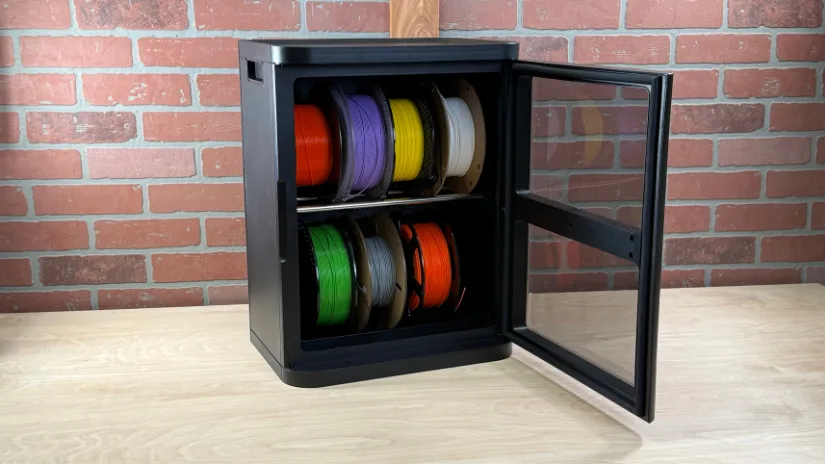
The Sunlu x Inslogic i10 Filament Dehumidifying Cabinet does exactly what the name states: it’s a sealed cabinet designed to store 3D printer filament in a low-humidity environment. Unlike typical filament dryers, which use hot air to remove moisture from filament, the i10 uses a molecular sieve dehumidification system to remove moisture from the air inside the cabinet. Drying filament can have a major impact on the quality of 3D prints but it’s not feasible to keep filament in an actively heated dryer indefinitely, which is where the i10 comes in.
Where to Buy
Pre-order available from September 15th, 2026.
Price: $1?9
Compare the Prices & Bundles:
Official Store
Capable of storing up to ten 1kg spools simultaneously, or a mix of larger sizes, the i10 is a unique entry in the world of 3D printer filament accessories. The concept of having an intermediate step between drying and printing may seem unnecessary for anyone who is used to printing with PLA or similar materials. However, for users printing with hygroscopic materials who want to prevent their filament from absorbing moisture between uses, the i10 will check a lot of boxes. Pricing has yet to be finalized, but with an anticipated price point under $199 USD, the i10 will likely be a popular accessory for prosumers.
Design of the i10 Filament Dehumidifier
Design of the i10 Filament Dehumidifier
©3DWithUs – Photo: Andrew Sink
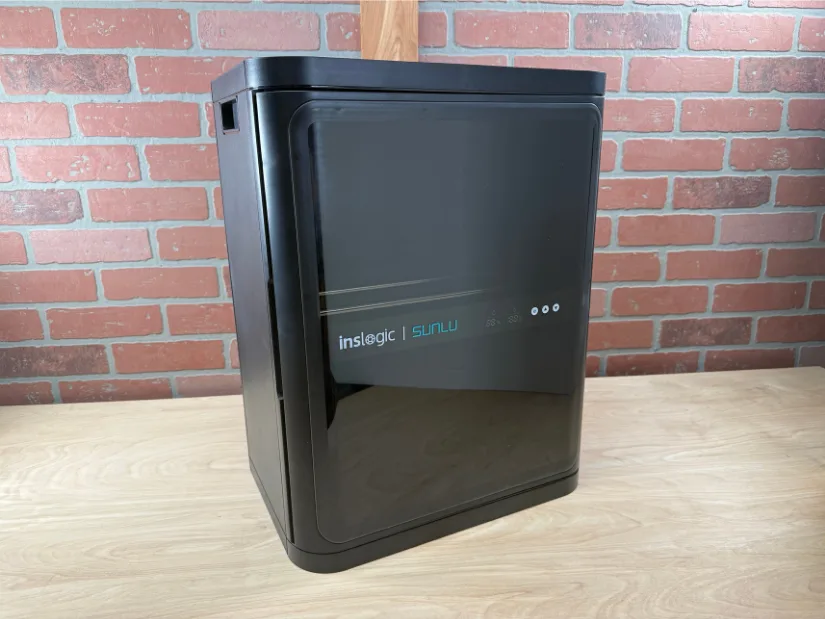
Unboxing the Sunlu x Inslogic i10 Filament Dehumidifier took less than five minutes, and the unit was running within a few minutes of being pulled out of the box. The overall build quality of the i10 is impressive, with the magnetically sealed door closing with a satisfying thump and the integrated gasket helping prevent outside air from leaking in. The target relative humidity can be increased or decreased using the buttons on the front of the unit. The integrated display shows both the current internal relative humidity and the internal temperature, displayed in either Celsius or Fahrenheit.
©3DWithUs – Photo: Andrew Sink
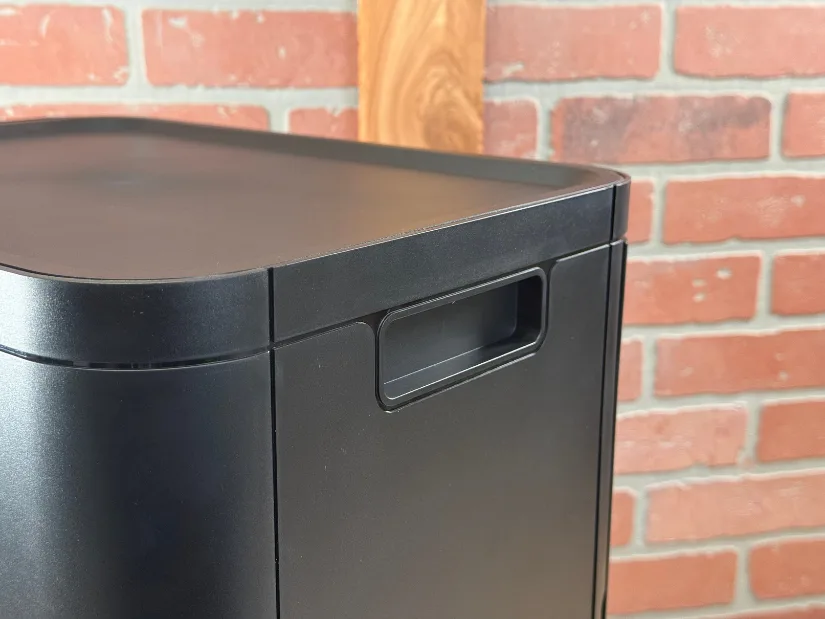
The i10 has some thoughtful industrial design touches, including handles integrated into the enclosure. I found myself picking it up and moving it around while it was full of filament without worrying about the door swinging open and spilling everywhere. It’s a useful feature for makers or professionals who frequently rearrange their workspace, and I was impressed with how sturdy the unit felt when carrying it around.
Using the i10 Filament Dehumidifier
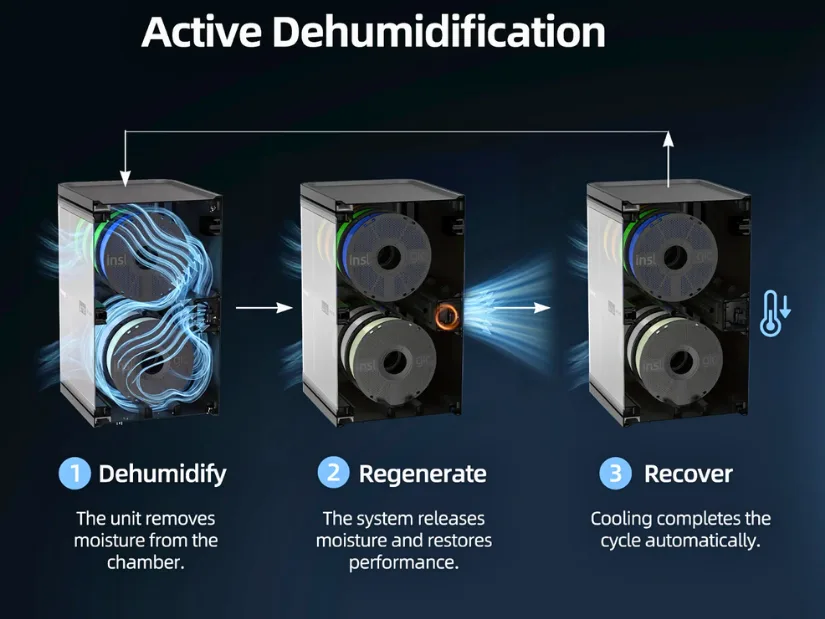
The i10 cycles through three modes during operation: dehumidify, regenerate, and recover. During these steps, the vent on the rear of the cabinet automatically opens and closes as the system manages moisture inside the cabinet. The onboard settings allow for a range between 10% and 55% relative humidity, with an advertised accuracy of ±5%. Sunlu recommends a range between 10% and 25% for most 3D printer filaments, while the higher relative humidity values are more appropriate for things like batteries, circuit boards, and other moisture-sensitive products. The i10 is advertised as operating below 30 dB, and it was quiet and unobtrusive during testing without being distracting.
©3DWithUs – Photo: Andrew Sink
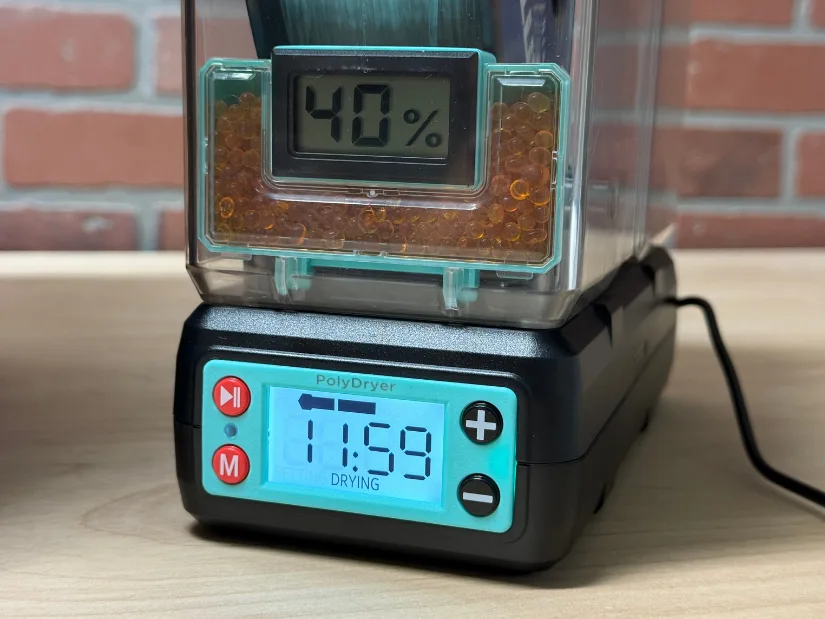
The i10 isn’t a replacement for a typical filament dryer, but more of a complementary piece of hardware designed to keep filament dry after it has been properly conditioned. I had a spool of Giantarm TPU that had been sitting out in open air for a few months and I used that as a practical test. First, I used the Polymaker PolyDryer (one of the best filament dryers) to dry the TPU for a 12-hour cycle. When the spool was first placed in the dryer with fresh desiccant, the PolyDryer’s internal sensor showed 40% relative humidity. After 12 hours, that reading had dropped to 17%.
©3DWithUs – Photo: Andrew Sink
I then transferred the dried spool of TPU into the i10, placed a separate humidity sensor in the cabinet, and left it running for 48 hours. This represents what I expect will be the typical workflow for most customers: dry the filament, store it in the i10, and keep it there until it’s needed.
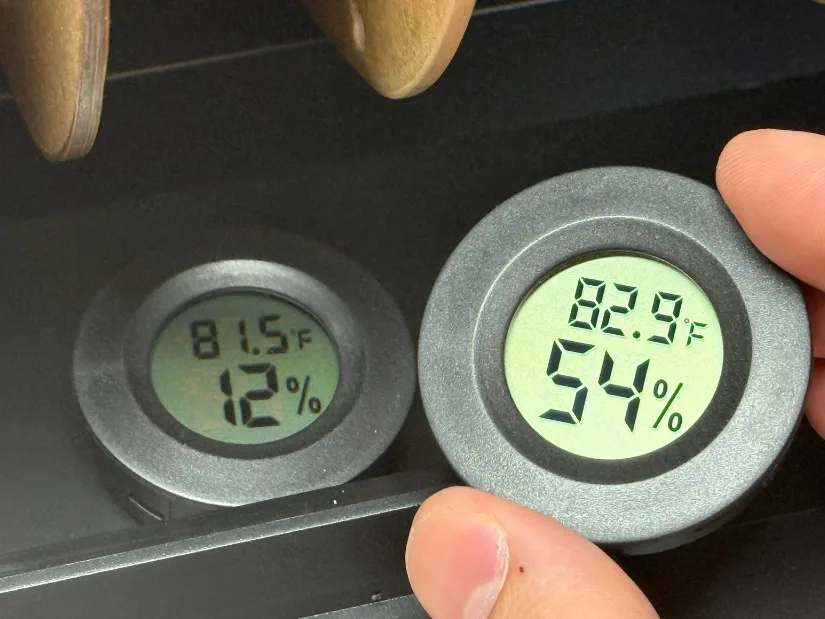
After 48 hours, the humidity sensor inside the i10 showed 12% while the sensor directly outside the unit measured 54%. This is where the i10 makes the most sense: instead of repeatedly drying filament that has absorbed moisture between prints, the cabinet provides a consistently dry environment for storing it between prints.
©3DWithUs – Print and Photo: Andrew Sink
Filament Storage Capacity
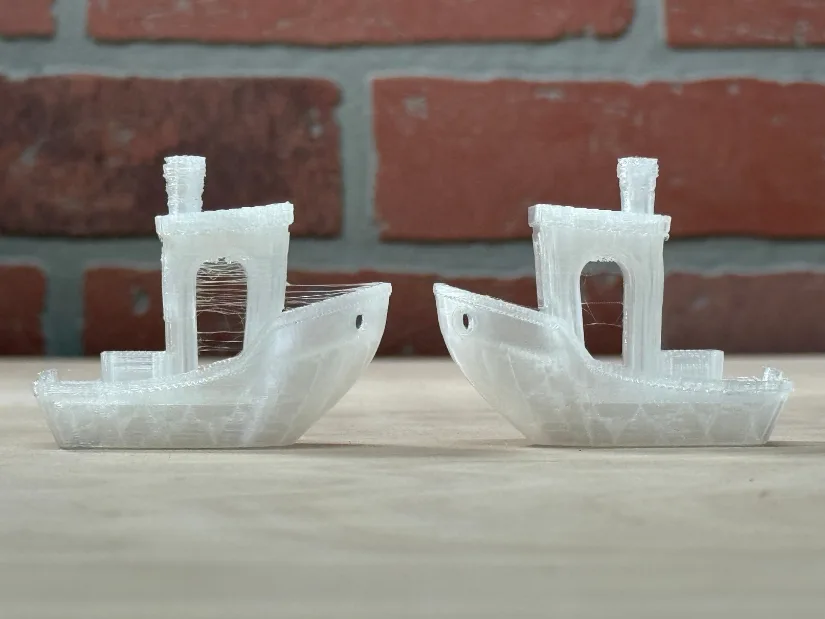
The benefit of drying and storing filament is clearly apparent when comparing the prints before and after this process. The TPU Benchy printed before drying had lots of stringing and a generally rough appearance on the upper part of the cabin. The model printed after drying and 48 hours of storage had less stringing as well as better definition on small features. It’s worth noting that this comparison shows the combined effect of the PolyDryer and i10, rather than the i10 alone, but it highlights the workflow the cabinet is designed to support.
©3DWithUs – Photo: Andrew Sink
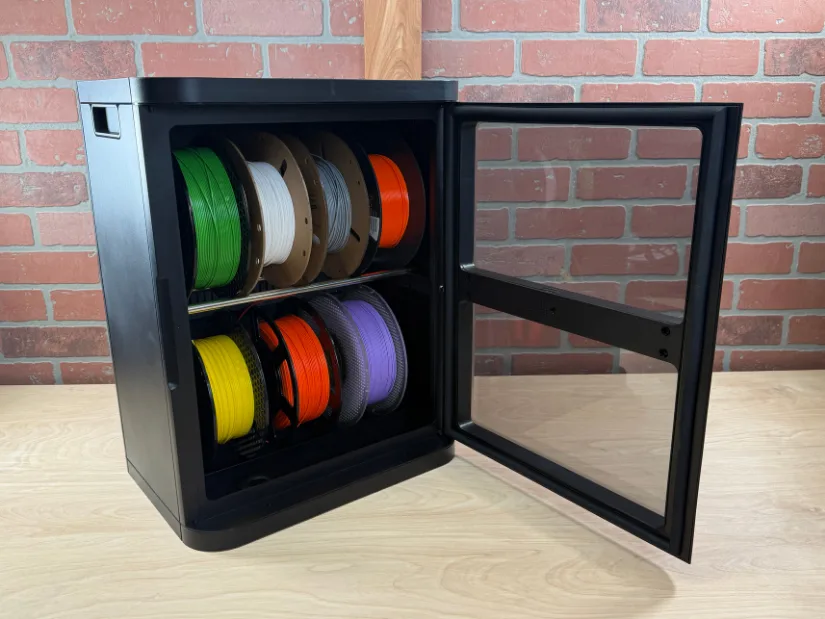
The Sunlu x Inslogic i10 Filament Dehumidifier can hold up to ten 1kg spools simultaneously, but the metal shelf rods are removable, allowing larger spools to be stacked on their sides. I tried spools from Elegoo, Prusa, Bambu Lab, Sliceworx, Polymaker, and several other manufacturers and didn’t run into any fit issues.
Conclusion
The Sunlu x Inslogic i10 Filament Dehumidifier is scheduled to open for pre-orders on September 15th on the Sunlu site, and interested customers can pay $1 for an “Early Access Pass,” which provides a $10 discount on the eventual pre-order price. The cost of the unit has not been announced, but Sunlu is targeting a price under $199 USD based on the graphic on the pre-order site.
Compare the Prices & Bundles:
Official Store
The i10 isn’t designed to be a replacement for a traditional filament dryer. Instead, it occupies a space between passive dry boxes and actively heated filament dryers. A standard filament dryer is designed to remove moisture from filament in a few hours, while the i10 is more suited for maintaining a low-humidity environment for filament that has already been dried over a period of days and weeks. For prosumers and professionals who frequently switch between materials and need to keep dry filament on standby, the i10 makes a lot of sense. For home users who just need to dry a spool or two of material once in a while, it’s worth learning a bit more about the other types of filament dryers on the market.